
A luxury boutique receives a shipment of custom-printed shopping bags. The design is flawless, the colors are perfect — but when a customer places a single item inside, the bag tips over on the counter. Another customer carries two garments, and the bottom seam splits before they reach the car. The brand impression is damaged, and the boutique switches suppliers.
This scenario plays out whenever packaging prioritizes cost over structural integrity. Square bottom paper bags cost more to produce than V-bottom alternatives. Yet retail customers consistently pay that premium. The reason is not aesthetic — it is engineering. Square bottom bags stand upright, carry heavier loads, and protect the brand’s reputation in ways that cheaper bags cannot.
This guide explains the technical factors behind square bottom bag strength: how the flat base distributes weight, how paper selection and sealing methods contribute to durability, and why retail customers measure value in stability rather than price per unit.
Square bottom bags — also known as block bottom, flat bottom, or SOS (self-opening square) bags — have a rectangular base that allows the bag to stand upright on its own. This shape delivers stability, professional presentation, and the ability to hold heavier loads without collapsing.
The structural advantage comes from three engineering factors:
A square bottom distributes the load evenly across a reinforced rectangular surface. When a customer places items inside, the weight spreads rather than concentrating at a single point. This prevents the bottom from bulging, tearing, or failing under pressure. By contrast, V-bottom bags concentrate weight at a pointed fold, creating a stress point that is more likely to fail.
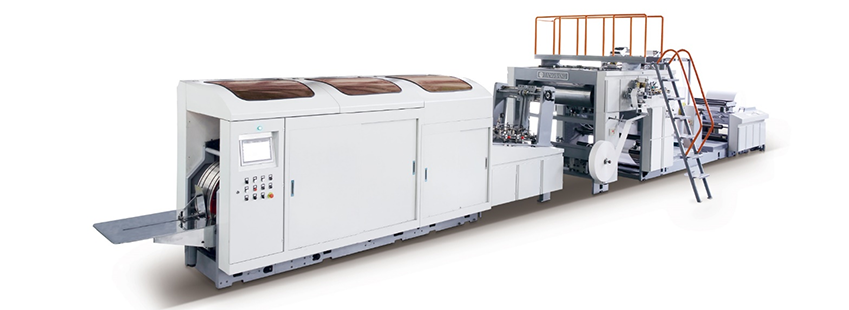
Square bottom paper bag machines use a multi-step forming process: the machine creates a paper tube, a drum and clamp system opens the tube, folds the bottom into a rectangular shape, applies glue, and presses it shut. The result is a reinforced flat base with multiple layers of paper overlapping at the bottom. Fangbang‘s ZD-FJ series implements paper feeding, tube forming, tube cutting, and bottom forming in a single inline process, with a photoelectric detector that corrects cutting length to ensure precision.
Square bottom forming with strong gusset sealing directly impacts bottom burst strength. The gusset — the folded side panel that allows the bag to expand — must be sealed precisely to prevent failure at the point where the base hinges during filling. According to Fangbang‘s technical documentation, a critical detail is the bottom overlap seal width, typically specified between 12 mm and 18 mm for medium bags. Insufficient overlap creates a stress concentration point exactly where the base hinges during filling. This is why square bottom machines require precise mechanical structures and control systems to ensure molding accuracy and overall bag strength.
The strength of a square bottom bag depends not only on its shape but also on the paper from which it is made. Retail customers who pay more for square bottom bags expect them to perform, and paper quality is the foundation of that performance.
Fangbang‘s square bottom paper bag machines accommodate a wide range of paper thicknesses, each suited to different load requirements:
| Machine Series | Paper Thickness Range | Typical Application |
| ZD-FJ series (roll-fed) | 45–170 g/m² | Food industry, e-commerce, bulk packaging |
| ZD-FP series (sheet-fed) | 100–250 g/m² | Luxury paper bags, premium shopping bags |
| ZD-QFJ series (handled) | 45–150 g/m² | Handled shopping bags, supermarket bags |
| ZD-QFB series (flat rope) | 70–160 g/m² | High-end retail, branded packaging |
The ZD-QFB series starts at 70 g/m², aligning with the heavier paper stocks required for premium retail bags that must withstand greater loads. For luxury retail applications, the ZD-FP sheet-fed series handles paper thickness up to 250 g/m² — capable of processing coated art paper, laminated board, and heavier specialty stocks.
Kraft paper is the most common material for square bottom retail bags because of its inherent strength and durability. According to industry testing, the burst factor for standard grocery bags should not fall below 25 kPa·m²/g. Virgin kraft paper typically delivers higher tensile energy absorption (TEA) and tear resistance than recycled alternatives, making it the preferred choice for bags that must survive sudden drops and heavy loads.
For retail applications requiring food-grade packaging, paper must also include wet-strength resin treatment to maintain integrity when exposed to moisture. Fangbang‘s dual glue application technology — combining precision water-based glue and hot melt adhesive systems — ensures strong, wrinkle-free bonding for various paper weights, including recycled paper, food-grade paper, and laminated materials.
The most direct measure of square bottom bag strength is load capacity. Independent testing and industry experience provide clear benchmarks.
Square bottom bags typically handle heavier loads better than V-bottom bags because of the reinforced base. Depending on paper quality, square bottom bags comfortably carry 4–6 kg. For heavier retail applications, handled square bottom bags with reinforced handles can survive loads of 10–15 kg.
These figures are not theoretical. European retail standards define a high-quality paper carrier bag as one that carries at least 6 kg of products from the supermarket and is reusable up to five times. This standard reflects what retail customers actually demand: bags that do not fail during normal use.
For a retailer, a bag that fails at the bottom or tears at the handle creates multiple problems:
Customer experience: A torn bag at the checkout counter or in the parking lot damages the shopping experience and creates negative brand association.
Product damage: Dropped items can break, leading to returns, refunds, and lost inventory.
Operational cost: Retail staff must re-bag items, slowing checkout lines and increasing labor costs.
Brand reputation: Customers remember when a bag fails — and they associate that failure with the brand, not the bag manufacturer.
This is why retail customers are willing to pay more for square bottom bags. The premium price buys reliability, and reliability protects the brand.
Square bottom bags cost more to produce than V-bottom bags. The reasons are straightforward:
More material: The flat base requires additional paper to reinforce the bottom.
More complex forming: Square bottom machines require more forming stations and precise control systems.
Heavier paper stocks: Premium retail bags use heavier paper (70–160 g/m² or higher), which costs more per unit area.
Yet retailers continue to specify square bottom bags for their primary packaging. The premium is not arbitrary — it reflects the value that stability delivers.
Square bottom bags stand upright on shelves. This may seem like a minor detail, but for retailers, it is essential:
Merchandising: Bags that stand upright can be displayed on shelves, counters, and end caps, extending brand visibility beyond the point of sale.
Customer convenience: Upright bags are easier to load at the checkout counter — customers can place items directly into a stable bag rather than holding it open.
Storage efficiency: Square bottom bags stack neatly, reducing storage space requirements both in-store and in the supply chain.
V-bottom bags, by contrast, do not stand upright. They are designed to get products from the counter to the customer‘s hand with minimal material waste. For takeaway and food service applications, this is perfectly adequate. For retail, it is a limitation.
European retail standards define a high-quality paper carrier bag as reusable up to five times. Square bottom bags are more likely to be reused because they maintain their shape and structural integrity through multiple uses. A bag that collapses after one use is discarded; a bag that stands upright and carries reliably is kept and reused.
For environmentally conscious retailers, reusability is a key metric. A bag that is used five times has one-fifth the environmental impact per use of a single-use bag. The square bottom‘s durability directly supports sustainability claims.
Supermarkets require bags that carry 4–6 kg of groceries, stand upright at the checkout counter, and survive the journey from store to car to home. Square bottom bags with reinforced gusset sealing deliver this performance.
Fangbang‘s ZD-FJ series roll-fed square bottom machines produce no-handle bags at up to 260 bags/min with paper thickness of 45–130 g/m². The ZD-FJ08 model, for example, handles tube length of 190–370mm and bag body width of 80–200mm — covering standard grocery bag sizes.
Luxury retailers demand bags that project quality and carry heavy loads without failure. Handled square bottom bags with flat rope handles are the standard.
Fangbang‘s ZD-QFB series is purpose-built for flat-rope handle bags, commonly seen in luxury shopping bags, branded retail packaging, and heavy-duty food-grade applications. The series handles paper thickness of 70–160 g/m² with flat handle rope widths of 10–16mm. The exclusive flat-rope handle system delivers a wider, more comfortable grip that customers in premium segments expect.
Fashion and apparel brands use square bottom bags as a branding tool. The bags must carry clothing items, stand upright on store counters, and display logos clearly. Fangbang‘s ZD-FP sheet-fed series is the ideal solution for manufacturing medium and high-end luxury paper bags, premium shopping bags, and eco-friendly paper handbags. Using a single sheet of high-quality kraft paper, art paper, or coated paper, the machine produces durable, flat-bottomed square paper bags in a single pass, ensuring exceptional bag-forming precision and consistency.
If you are evaluating whether to produce square bottom bags for retail customers, consider these questions:
Yes → Square bottom is the expected format.
No → V-bottom may be sufficient for takeaway applications.
Under 2 kg → V-bottom may be adequate.
2–6 kg → Square bottom provides necessary strength.
Over 6 kg → Square bottom with reinforced handles is required.
Yes → Square bottom‘s durability supports multiple uses.
No → Reusability may not be a priority.
Yes (retail display, merchandising) → Square bottom is essential.
No (takeaway, delivery) → V-bottom may be acceptable.
Premium, luxury, or branded retail → Square bottom projects quality.
Value or commodity → V-bottom may be the more cost-effective choice.
Once you have determined that square bottom bags are the right fit for your retail customers — based on load requirements, shelf presentation needs, and brand positioning — the next logical step is selecting the appropriate machine configuration. Understanding how paper thickness range, speed, handle compatibility, and feeding method align with your production requirements will determine which specific model delivers the best return for your operation.
For a practical comparison of roll-fed and sheet-fed square bottom paper bag machines — and how each configuration serves different retail segments — review the detailed Automatic Square Bottom Paper Bag Machine specifications available in Fangbang‘s product lineup, covering both no-handle and handle-capable configurations for retail packaging applications.
The following guides explore specific aspects of square bottom bag production and retail packaging in greater depth:
Square Bottom or V-Bottom Paper Bag Machine – Which Suits You?
ZD-QFJ vs ZD-QFB Square Bottom Paper Bag Machine – Differences
Square Bottom Paper Bag Machine for Retail vs E-Commerce – Which?
Full-Servo Automatic Square Bottom Paper Bag Making Machine for high-efficiency production of eco-friendly paper bags wi...
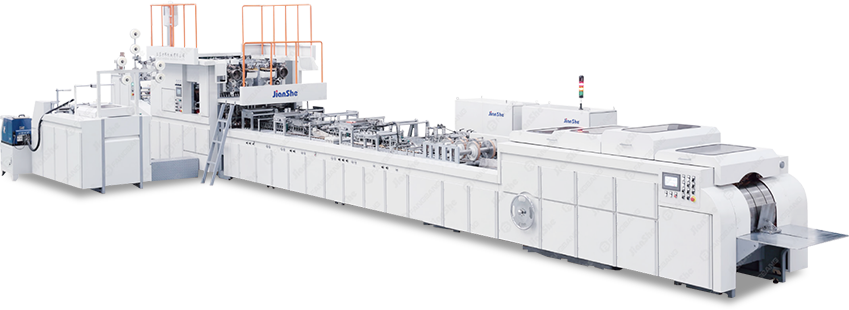
Fully Automatic Sheet-Fed Square Bottom Paper Bag Machine produces paper bags with handles at high speed. Uses sheet pap...
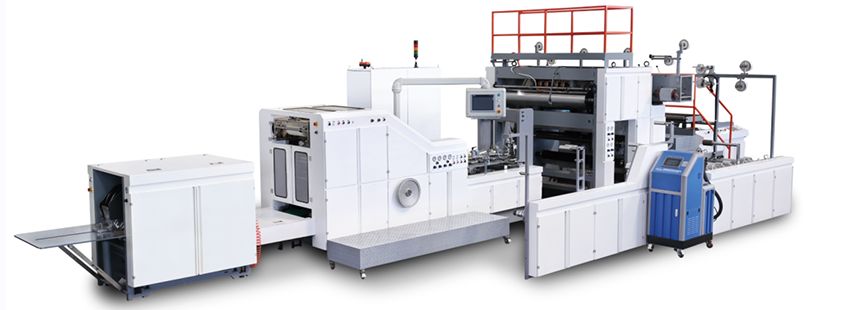
This machine is designed to manufacture square bottom paper bags with flat-rope handles from paper roll,paper patch roll...
GET A QUOTE




 中文
中文 English
 Español
 Français
 Pусский