
You run a packaging plant. One day, a boutique clothing brand asks for 5,000 handled paper bags with a specific logo placement. The next day, an online electronics retailer needs 200,000 unbranded square bottom bags for shipping protection. Your paper bag making machine must handle both, but can one configuration excel at both extremes without creating waste or bottlenecks?
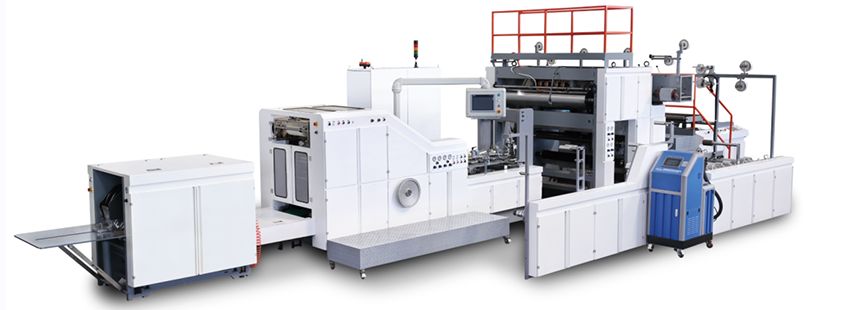
The choice between optimizing for retail or e-commerce is not about which market is larger. It is about understanding how order volume, bag variety, and speed requirements change the economics of your production line. This guide breaks down the operational differences between retail-driven and e-commerce-driven paper bag manufacturing, helping you map machine capabilities to your actual customer demand patterns.
Retail and e-commerce serve different packaging missions. Retail bags are brand tools — designed to be carried in hand, seen in public, and often reused. E‑commerce bags are protective layers — designed to fit inside shipping cartons, absorb rough handling, and minimize material cost.
| Decision Factor | Retail-Focused Production | E‑Commerce-Focused Production |
|---|---|---|
| Typical order size | 5,000 – 50,000 bags per SKU | 100,000+ bags per SKU |
| Bag variety per day | High (different sizes, colors, handle types) | Low (1–3 standardized sizes) |
| Handle requirement | Often required (flat rope, round rope, twisted paper) | Rarely required (plain square bottom) |
| Printing complexity | Multi-color, precise registration, brand logos | Single-color or no printing (shipping focus) |
| Changeover frequency | Several times per shift | Once per shift or per day |
| Material range | 70–160 g/m² (coated, kraft, specialty) | 80–120 g/m² (standard kraft, recycled) |
| Primary cost driver | Print quality + handle attachment consistency | Bags per minute + material yield |
According to a 2023 market analysis by Smithers, the global paper packaging market is projected to grow at 3.5% annually through 2028, with e‑commerce fulfillment driving a larger share of volume but retail driving a larger share of value per bag. This divergence means your machine selection should reflect which profit model you are pursuing — not just which bags you want to make.
Understanding your customer order profile is the first step. Use this three-part evaluation to identify whether your production should lean toward retail agility or e‑commerce throughput.
Create a simple table for one typical week:
| Metric | Low | Medium | High (your actual) |
|---|---|---|---|
| Total bags produced | < 50,000 | 50,000 – 300,000 | > 300,000 |
| Unique bag sizes | > 8 | 4 – 8 | < 4 |
| Handle types required | 3+ | 2 | 0 – 1 |
| Color changes per shift | > 3 | 1 – 3 | 0 – 1 |
If your numbers consistently fall into the Low column for volume but the High column for variety, your production profile fits a retail-optimized paper bag machine. If you are in the high-volume, low-variety zone, an e‑commerce-optimized configuration will deliver lower cost per bag.
Every time you switch bag size, handle type, or paper roll, your machine stops producing. For retail-focused plants with 6–8 changeovers per shift, downtime can reach 90–120 minutes daily. For e‑commerce lines with one changeover per day, downtime is negligible.
The real question is not “Does the machine support quick changeover?” but “How many changeovers does my business model require?”
If your answer is “many,” prioritize equipment with servo-driven adjustable forming templates and preset size memory. This feature — where operators recall a bag size from a control panel instead of manually repositioning formers — can reduce changeover from 25 minutes to under 5 minutes per job. This directly translates to more retail-style orders completed per shift. To understand how different automation levels affect changeover speed and labor requirements, see this detailed comparison of paper bag machine automation levels — from manual setups to full-servo configurations.
Handles are the single biggest differentiator between retail and e‑commerce bag production. Adding a handle unit consumes floor space, adds maintenance complexity, and limits top running speed. A dedicated retail paper bag machine with handle patching typically runs at 110–220 bags per minute. A high-speed plain square bottom machine without handles can exceed 260 bags per minute and reach over 300 bags per minute for fixed-size configurations.
For manufacturers serving both markets, a modular design approach — where handle attachment units can be engaged or bypassed — offers the best flexibility. This allows you to run high-volume e‑commerce orders at full speed, then activate handle forming for retail batches without moving production to a different machine.
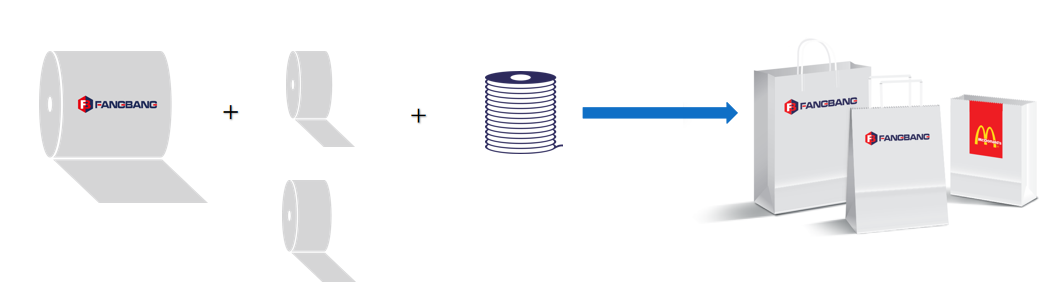
For a closer look at how modular configurations support mixed-order environments, explore the design principles behind roll-fed square bottom paper bag machines that accommodate printing, dual-layer pasting, and handle patching as optional modules.
A mid-sized converter in Southeast Asia produces bags for 15 different apparel and gift brands. Weekly orders range from 8,000 bags for a seasonal promotion to 40,000 bags for a department store chain. Bag sizes vary from small jewelry pouches (width 180mm) to large shopping bags (width 450mm). Handles are required on 70% of orders, with three different handle colors and two handle types.
Key machine requirements for this scenario:
Sheet-fed or roll-fed with fast size change — the ability to switch between bag lengths of 270mm and 770mm without changing physical formers
Integrated handle patching with compatibility for both flat rope and round rope
Moderate speed (150–200 bags/min) — enough to complete 40,000 bags in one shift, but not so fast that changeover overhead dominates
What to prioritize: Flexible forming system + handle versatility
A large-scale operation in Eastern Europe produces plain square bottom bags for five major online marketplaces. Each bag style is standardized by size: small (for books and electronics), medium (for apparel), and large (for household goods). Weekly volume exceeds 500,000 bags. No handles. No printing except a small “recyclable” stamp.
Key machine requirements for this scenario:
Maximum sustained speed — targeting 250+ bags per minute to meet daily quotas with one shift
Large roll capacity (1500mm roll diameter) to reduce roll change frequency
Minimal changeover — one size change per day or less
Plain square bottom only — no handle or printing complexity
What to prioritize: Throughput + uptime + material efficiency
For operations that handle both scenario types across different shifts or facilities, a hybrid approach becomes relevant. Learn how complete paper packaging production solutions can be configured with interchangeable modules to serve retail and e‑commerce from a single manufacturing campus.
Ask these questions with your production team before specifying a new square-bottom paper bag machine:
What percentage of orders require handles?
Below 20% → consider a plain machine with a separate handle attachment workcell. Above 60% → prioritize integrated handle forming.
How many unique bag sizes do you produce per month?
Over 20 → servo-driven adjustable forming is non-negotiable. Under 10 → fixed former with preset stops may be sufficient.
Is multi-color flexo printing done in-line or off-line?
Inline printing adds speed for retail jobs but increases setup complexity. If most e‑commerce bags are unprinted, separate printing and bag making lines may lower total cost.
What is your maximum daily order volume for a single SKU?
Over 100,000 bags → you need a dedicated high-speed line without handle interruption. Under 50,000 → A flexible retail-focused machine can cover both.
Do you expect your e‑commerce vs. retail mix to change in 24 months?
If e‑commerce is growing faster, avoid over-investing in handle and multi-color print features that may become underutilized.
For a deeper look at how material choices impact machine performance, Reach out to us with your queries and needs.
Once you have clarified your dominant order profile — retail variety and branding vs. e‑commerce volume and standardization — the next logical step is comparing specific technical specifications. You can evaluate equipment families designed for high-mix, quick-changeover environments, or those optimized for sustained single-product runs. Understanding how actual machine parameters (maximum paper roll diameter, servo motor count, forming template adjustability) align with your daily order board will determine long-term profitability.
For a deeper comparison of machine configurations and their operational trade-offs, see the guide “Paper Bag Machine Automation Levels: Manual, Semi-Automatic, or Full-Servo?” — which walks through how control systems impact changeover speed, labor cost, and production consistency across different order types.
Paper Bag Machine Automation Levels: Manual, Semi-Automatic, or Full-Servo?
How to Calculate Total Cost Per Bag: Material, Speed, and Waste Factors
Flexo Printing for Paper Bags: When Inline Integration Makes Sense
Valve Bag vs. Square Bottom Paper Bag: Production Line Differences
Paper Bag Machine Sizing Guide: Matching Output to Your Sales Forecast

Full-Servo Automatic Square Bottom Paper Bag Making Machine for high-efficiency production of eco-friendly paper bags wi...
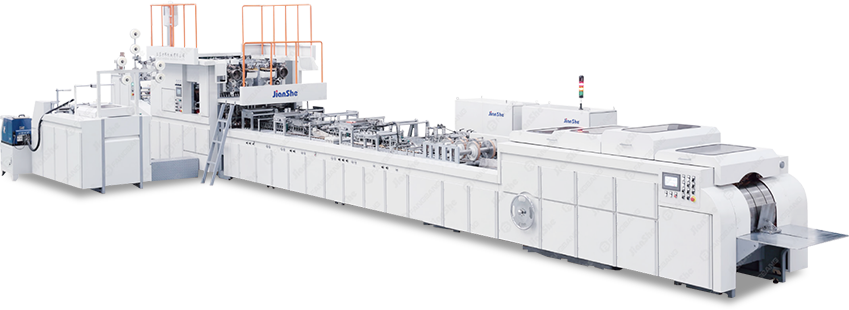
Fully Automatic Sheet-Fed Square Bottom Paper Bag Machine produces paper bags with handles at high speed. Uses sheet pap...
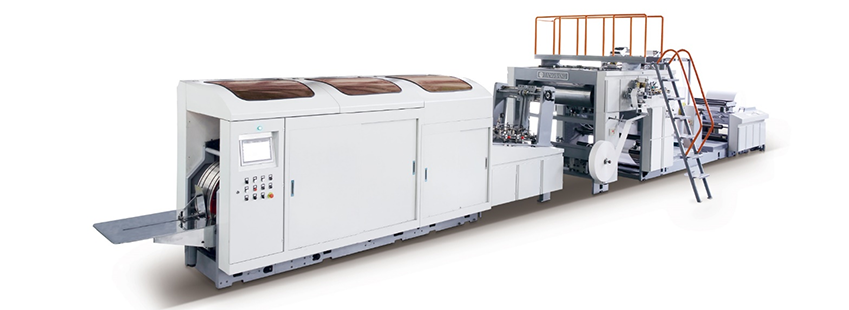
This machine is designed to manufacture square bottom paper bags with flat-rope handles from paper roll,paper patch roll...
GET A QUOTE




 中文
中文 English
 Español
 Français
 Pусский