
Imagine a specialty coffee roaster launching a new subscription service. The branding is perfect, the beans are fresh, but complaints flood in: the flat-bottom bags split along the side gussets before the first brew. The material felt sturdy, the dimensions matched the sample, yet something failed. Often, the root cause is not a single wrong choice, but a misalignment between paper grade, bag geometry, and the requirements of the converting process. While the paper bag machine carries out the physical work, its output can only be as good as the decisions made upstream. This article walks through the three pillars that determine whether a bag arrives intact and on-brand: materials, sizes, and standards.
Choosing paper involves far more than picking a grammage that “feels thick enough.” The interplay of fiber composition, direction, wet strength, and surface treatment directly affects downstream forming, printing quality, and end-user durability. According to ISO 536, grammage alone only tells part of the story; tensile energy absorption (TEA) and tear resistance matter deeply when a bag must survive a sudden drop.
The table below outlines practical trade-offs based on common converting experiences and lab data.
| Property | Virgin Kraft Paper | Coated Art Paper (SBS/CUK) | Post-Consumer Recycled |
|---|---|---|---|
| Typical Grammage | 30-150 g/m² | 180-350 g/m² | 60-120 g/m² |
| Fiber Orientation Effect | Strong impact on opening force | Moderate impact, more isotropic | Often weaker due to shorter fibers |
| Wet Strength (without additive) | Low; requires wet-strength resin for food use | Inherently low; can be treated | Low; requires careful additive dosing |
| Print Surface | Can be smooth (MF) or rough (MG) | Excellent holdout for offset/flexo | May show speckling, needs coating for detail |
| Available Eco-Certs | FSC Mix, PEFC, Nordic Swan | FSC depending on the pulp source | FSC Recycled, Blauer Engel, EU Ecolabel |
| Typical Bag App | Grocery bags, takeaway, industrial valve bags | Luxury retail, cosmetics, duty-free | Eco-conscious retail, lightweight tote bags |
A frequent mistake, noted by several packaging engineers, is ignoring the fiber orientation relative to the bag mouth. When machine-direction fibers run parallel to the opening, the bag tends to stay open more readily; when they run perpendicular, the opening tension often causes tearing. Many mills indicate the machine direction on the pallet label, but converters sometimes trim rolls without checking, leading to production stops. A modern paper bag machine that offers adaptive tension control can mitigate some of this variability, yet specifying the correct roll-tilt angle remains a foundational quality measure.
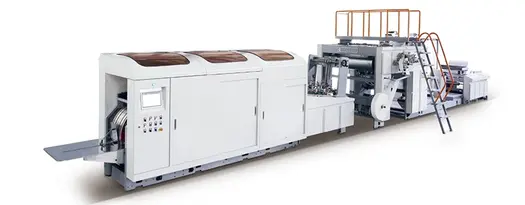
For operations frequently switching between lightweight kraft for bread bags and heavier board for structured retail bags, changeover time becomes a hidden cost. Consistency in reel diameters and splice performance is often overlooked during material qualification. Astute floor managers therefore look for ways to minimize variability from the start rather than adjusting machine parameters reactively. Learn how modern unwinding and feeding approaches handle frequent grade changes.
Defining bag dimensions goes far beyond “width x height x gusset.” The relationship between these values determines whether a bag stands upright on a shelf or collapses, whether the bottom seals gas-tight, and how much product fill weight it can truly support.
A flat-bottom bag with a fully opened square base relies on a precise ratio between gusset width and tube width. Industry practice among packaging converters suggests that for standard SOS (self-opening square bottom) bags, the gusset depth should be around 40-50% of the front panel width. If the gusset is too shallow, the opening area shrinks and the bag tends to tip forward when filled with loose granola or charcoal. If too deep, the side folds wrinkle during forming and the outer edges lose print registration.
One large European pet food supplier learned this when switching from a flat pouch to a block-bottom paper bag. Their initial sample used a 160 mm gusset with a 320 mm front width, believing a deeper gusset would maximize capacity. The result: the bottom patch did not adhere fully to the gusset crease, and the side seams became untidy under 2 kg of load. After adopting a 140 mm gusset with a modified bottom patch shape, the bag stood reliably and passed the drop test without re-engineering the entire format.
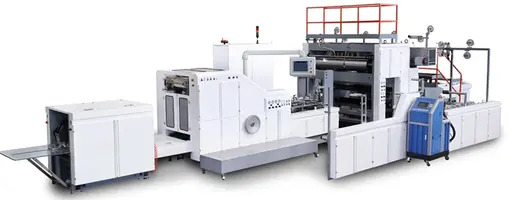
A critical detail is the bottom overlap seal width, typically specified between 12 mm and 18 mm for medium bags. Insufficient overlap creates a stress concentration point exactly where the base hinges during filling. Small geometrical adjustments here often extend bag lifespan more effectively than upgrading material strength alone. To achieve repeatable fold tolerances across thousands of bags, converters need forming units that maintain alignment and heat distribution consistently. High-precision bottom-forming stations address these exact requirements.
Regulatory requirements and voluntary quality standards form the third pillar, and they differ dramatically depending on the destination market and bag content.
For food contact, the EU framework regulation (EC) No 1935/2004 and the German BfR recommendations are frequently referenced. Migration limits for optical brighteners, formaldehyde, and heavy metals must be verified on the finished bag, not just on the raw paper. A bakery chain in Central Europe had to recall an entire batch of windowed bread bags because the adhesive used on the transparent film transferred primary aromatic amines above the 0.01 mg/kg detection limit—a costly reminder that compliance tests must cover the whole composite, not isolated layers.
Physical performance standards such as TAPPI T 494 (tensile properties) and ASTM D828 guide the minimum acceptable breaking resistance. For e-commerce mailers, the ISTA 3A drop and vibration protocols are fast becoming the go-to reference. A third-party lab can test according to these frameworks, but many converters are now embedding inline inspection to catch deviations before a full run is wasted. Being able to integrate quality checks directly on the paper bag machine—monitoring seam alignment, print registration, and even stray adhesive dots—can reduce end-of-line scrap by a measurable margin. When a converting line includes camera-based verification tied to real-time feedback, batch traceability improves too, supporting ISO 22000 food safety management requirements.
For companies targeting regulated markets, documentation is as important as the product. Certificates of analysis for wet-strength agents, migration test reports, and FSC chain-of-custody numbers need to be readily retrievable. If the equipment itself limits the type of approved adhesives or coatings that can run, the path to certification slows down. That’s why some converters prefer configurations that leave room for future compliance upgrades.
Material insights, dimension ratios, and compliance data do not exist in isolation. A bag that meets all three criteria represents a deliberate orchestration: the paper with the right fiber orientation folded into a geometry that respects seal strengths, all while staying inside audit-ready tolerances. Leading converters often conduct a pre-production “mini trial” using offcuts before committing full reels, a low-cost habit that has prevented many expensive rework orders.
As sustainability pressures push for lighter weights (sometimes down to 50 g/m² for grocery bags) without sacrificing toughness, the margin for error keeps shrinking. The best outcomes emerge when raw material selection and machine capabilities are developed together rather than treated as separate procurement tasks.
If you aim to bring that level of coherence to your own packaging line—where material, size, and regulatory requirements converge into a repeatable, high-quality output—Fangbang’s approach offers a reference for what an integrated solution can look like. Have a closer look at the complete production technologies Fangbang has refined for complex paper converting demands.
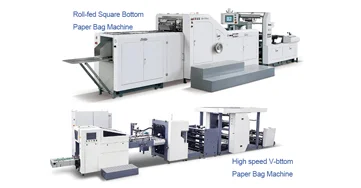

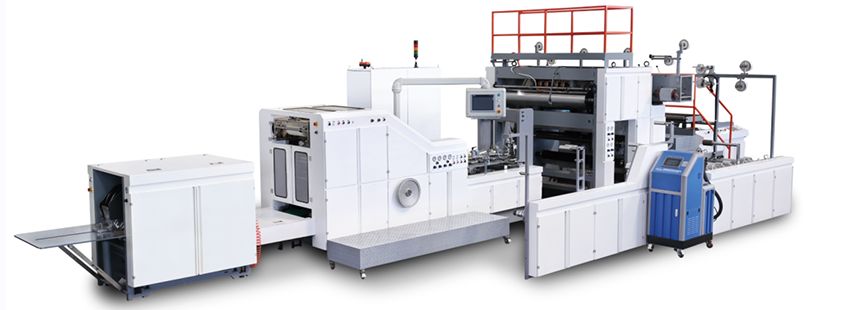
Full-Servo Automatic Square Bottom Paper Bag Making Machine for high-efficiency production of eco-friendly paper bags wi...
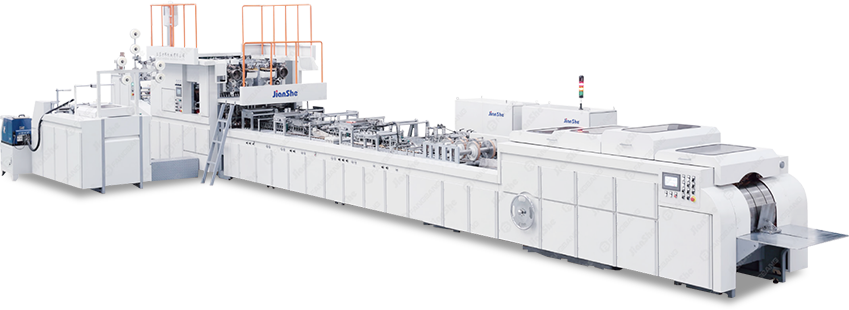
Fully Automatic Sheet-Fed Square Bottom Paper Bag Machine produces paper bags with handles at high speed. Uses sheet pap...
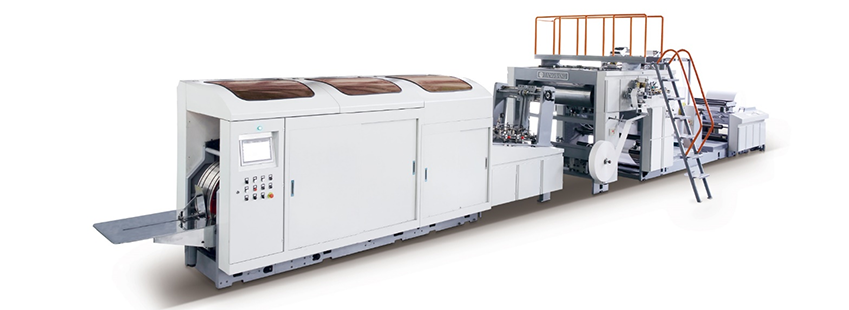
This machine is designed to manufacture square bottom paper bags with flat-rope handles from paper roll,paper patch roll...
GET A QUOTE




 中文
中文 English
 Español
 Français
 Pусский