
You are losing money every time your production line stutters. Whether it is a misfeed, a glue drip, or a misaligned print registration, those minutes of lost uptime add up to thousands in wasted raw material and missed delivery deadlines. The immediate answer to reducing this financial drain isn't just buying a faster asset; it is about investing in predictive responsiveness. You need a system that self-corrects before a minor tremor becomes a catastrophic jam, ensuring the paper bag making process transitions from a reactive firefight to a proactive profit center.
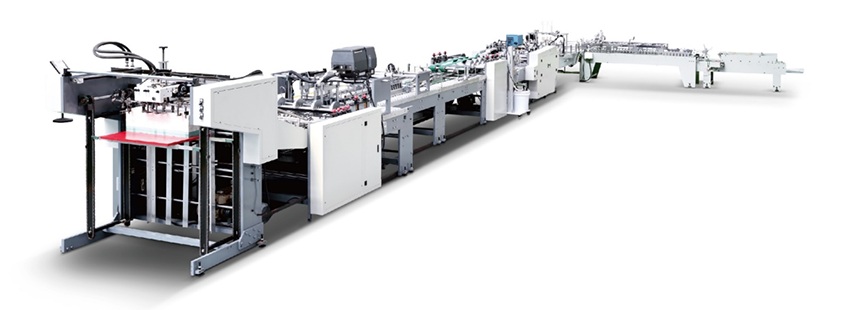
In the competitive world of sustainable packaging, every second counts. However, most plant managers are fighting the same losing battle against Overall Equipment Effectiveness (OEE) killers. You might see a machine running, but I see the hidden scrap pile forming. Industry analysts note that typical packaging scrap rates hover between 3-5%. While that number sounds small, halving it directly impacts your bottom line—freeing up capacity, labor, and energy.
The real villain here isn't speed; it is variability. Traditional machinery relies on the "golden run" where everything aligns perfectly. But the moment your paper reel has a slight tension variation, or the humidity changes, the mechanical dance falls apart. You are then stuck in a loop of stop-start production, manually chasing knives and recalibrating seals. This is not manufacturing; it is damage control.
We have been conditioned to believe that automation simply means pressing a button. However, first-generation automation just replaced the muscle, not the brain. To truly solve downtime, you need to look at the sensors.
Recent data from the packaging sector reveals that nearly 75% of companies saw improvements in OEE after adopting predictive maintenance technology. The shift is from reactive to adaptive control. Imagine a system where real-time sensors detect a 1mm drift in the paper web and automatically adjust the tension zones without you ever hitting the stop button. That is the difference between a mechanic and a guardian angel for your bag converting needs.
Why do so many flat-bottom bag operations struggle with consistency? Because they rely on mechanical linkages that wear out. When a mechanical part wears by a millimeter, your bag quality degrades by a centimeter. Modern solutions pivot to servo-driven systems. Unlike pneumatic or clutch-based systems, servos offer absolute positional feedback.
If you are producing e-commerce mailers or retail shopping bags, the structural integrity of the bottom fold is non-negotiable. A weak bottom isn't a defect; it is a liability. By decoupling the cutting and folding actions into independent servo zones, the machine maintains exact registration even at variable speeds. You stop throwing away misaligned stacks and start shipping boxes that look identical, every single time.
Let’s talk about the silent killer of productivity: setup time. If your team spends two hours every morning tweaking heaters, aligning rollers, and running test sheets to get the "feel" right, you are burning daylight. The modern approach to flexible packaging involves digital recipe management.
Think of it like loading a file on a 3D printer. You shouldn't need a wrench to change the bag size. Smart machinery allows operators to recall pre-saved parameters for temperature, tension, and tool positioning instantly. As one industry expert put it, "Anybody that can use a tablet can now theoretically set up the machine". This democratization of production scheduling means your most skilled operator isn't wasting time on grunt work; they are focused on innovation.
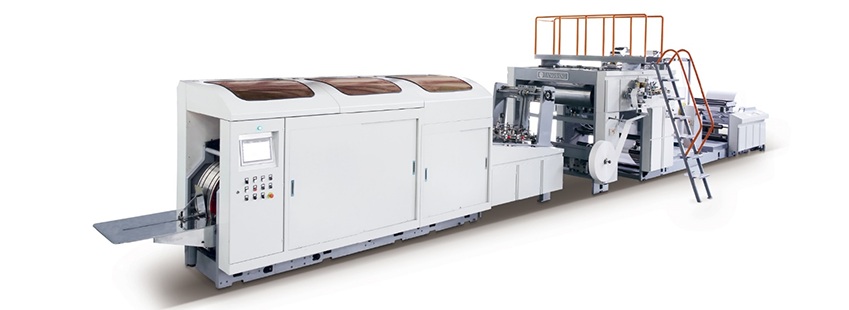
When evaluating ROI, look past the sticker price. A cheaper asset might cost you 30% more in energy consumption because it lacks variable frequency drives. Data on square-bottom converting shows that while high-speed models (200+ bags/min) consume more power, modern energy-saving features can reduce electricity usage by up to 30%. You need to calculate the lifetime cost.
Furthermore, consider the maintenance burden. Generic parts might save you $100 today but cost you $10,000 in downtime tomorrow if they fail. A truly intelligent manufacturing partner designs for tool-less adjustments and easy access. If you need a wrench to change a worn blade, the design is outdated.
We cannot ignore the elephant in the room. Why switch to paper? While plastic bag lines can extrude at massive speeds (500+ bags/min), they are facing regulatory headwinds and shifting consumer sentiment. Paper, conversely, offers biodegradability and strength. However, paper is less forgiving. It tears, it warps with moisture, and it demands precision gluing.
This is precisely where a high-performance paper bag making solution justifies its existence. It is engineered to handle the specific tensile strength of kraft and recycled papers without crumpling the side gussets. It turns a "fragile" material into a robust, high-end vessel for luxury goods or groceries.
To stop chasing breakdowns and start chasing targets, you need a partner who understands the physics of folding. Fangbang has moved beyond the traditional "roll-fed" limitations to create systems that treat every bag as a unique data point.
Their approach integrates the three pillars of OEE: Availability, Performance, and Quality. By hardening the electronics against dust and vibration, they ensure the Availability stays high. By utilizing smart tension control that reacts in milliseconds, they maximize Performance. And by using precision cutting dies that align with vision systems, they lock in Quality.
If you are currently running a mix of semi-automatic or older mechanical paper bag machines, you are fighting a losing battle against physics. You need a system where the HMI talks to the servo drives without latency. You need a solution that doesn't just fold paper but collects data on every cycle to predict the next failure.
Investing in a smart converting solution like the ones engineered by Fangbang means moving from a "fix-on-fail" model to a "predictive" model. It means your line runs lights-out during the night shift without a supervisor hovering over the exit conveyor. It means the days of clearing a jam of 50 crushed bags are over.
Ultimately, the packaging industry is moving toward autonomous operation. The businesses that survive the margin squeeze will be those that treat their converting equipment not as a cost center, but as a competitive weapon. Scrap is a tax on poor engineering. Downtime is a luxury you cannot afford.
By adopting a data-driven, servo-stabilized approach to bag making, you shift the paradigm. You stop being a firefighter and start being a profit engineer. It is time to demand that your machinery works as hard as you do.
Ready to calculate exactly how much downtime is costing your facility? Discover the technical specifications of Fangbang’s high-speed line.

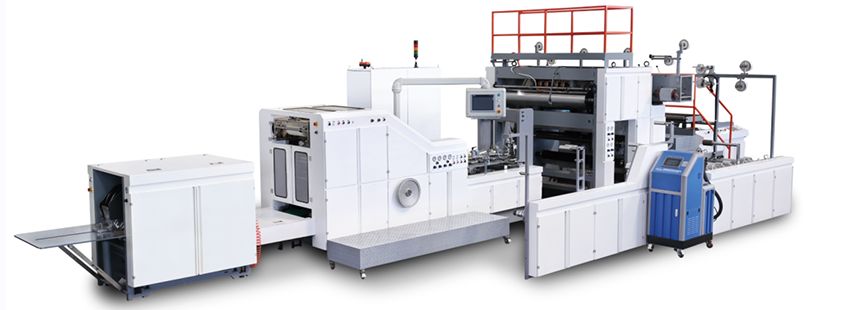
Full-Servo Automatic Square Bottom Paper Bag Making Machine for high-efficiency production of eco-friendly paper bags wi...
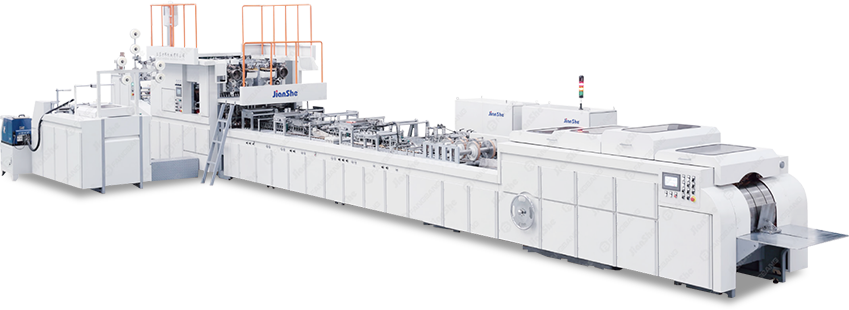
Fully Automatic Sheet-Fed Square Bottom Paper Bag Machine produces paper bags with handles at high speed. Uses sheet pap...
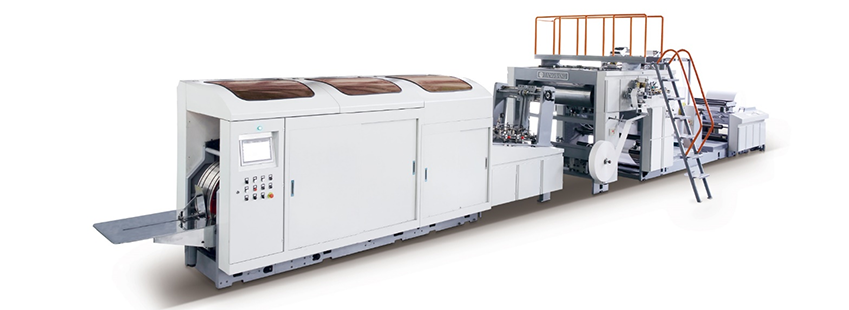
This machine is designed to manufacture square bottom paper bags with flat-rope handles from paper roll,paper patch roll...
GET A QUOTE




 中文
中文 English
 Español
 Français
 Pусский