
First, here’s the direct answer to the question on every manufacturer’s mind: How do you turn a roll of paper into a finished paper bag efficiently, without wasting labor or material? The answer lies in a fully automated, inline process that transforms a jumbo paper roll into a stack of ready-to-use square-bottom paper bags in a single, uninterrupted production line. According to DIResearch, the global paper bag machines market is projected to reach $591.41 million in 2025 and is forecast to grow to $746.35 million by 2032, driven by accelerating bans on single-use plastics and surging demand for sustainable retail packaging. For packaging manufacturers and paper bag suppliers, that growth translates into one urgent business question: how to scale up production without breaking the bank on labor or compromising bag quality.
Walk into any traditional bag workshop, and you’ll see the same scene: skilled workers hunched over glue applicators, manually folding bottoms, inserting ropes one by one. Manual paper bag production is painfully slow—a single skilled worker can only produce around 300 to 1,000 paper bags per hour, limited by physical endurance and attention span. Worse, defect rates in hand-made paper bags can run as high as 5% to 10%, caused by uneven glue application, inconsistent folding precision, and human fatigue. For a business handling daily orders in the tens of thousands, that’s not just inefficiency—that’s a competitive death sentence.
Many mid-sized manufacturers get stuck in the “semi-automatic trap.” They invest in entry-level equipment, only to discover that labor costs devour their margins. A semi-automatic paper bag manufacturing setup typically requires 3 to 5 operators for tasks like rope insertion and bottom gluing. At an average monthly wage, that translates to $400 to $700 per person in monthly labor expenses alone. Meanwhile, fluctuating paper prices and rising energy costs squeeze profits further.
This is where the industry’s shift toward fully automated packaging equipment becomes not just a strategic advantage but an operational necessity.
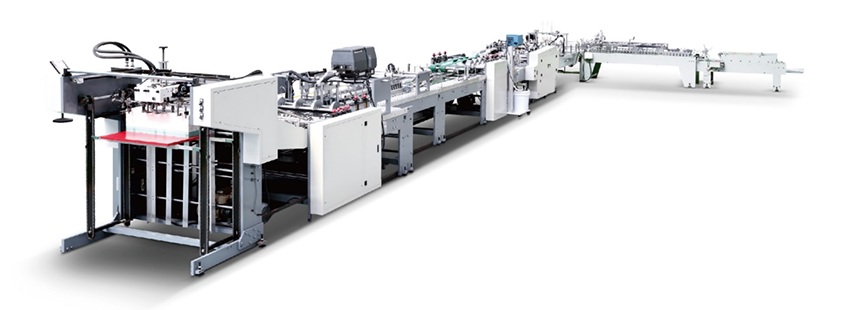
So what does the roll-to-bag manufacturing workflow actually look like on a modern production floor? Let me walk you through it step by step, based on how integrated systems actually run in real-world factories.
The process starts with an automatic hydraulic lifting system that replaces the back-breaking manual effort of loading heavy paper rolls. A web guiding system then ensures the paper feeds straight, minimizing adjustment time and preventing costly paper jams.
As the paper unwinds, it passes through forming stations that fold it into a tube shape. A photoelectric detector constantly monitors the paper position to ensure precise cutting length. Paper tube forming accuracy is critical here—even a 1mm deviation can ruin bottom alignment later.
The flat tube is then opened, bottom flaps are folded, adhesive is applied, and the bottom is pressed under controlled pressure. This is where automated systems outperform manual operations by a mile—consistent glue coverage means no popped bottoms in the final product.
For shopping bags and gift bags, handles are applied inline. Depending on the bag type, this could involve twisted-paper rope handles, flat tape handles, or die-cut handle holes. Advanced systems integrate handle forming and patching into the same continuous flow.
Finally, finished bags are counted automatically, stacked neatly, and ready for packaging and shipping—all with minimal human intervention.
The entire process, from raw roll to finished stack, runs at speeds ranging from 110 to 220 bags per minute, depending on bag complexity and handle type.
Here’s where many buyers get misled. They chase the highest bag-per-minute number on a spec sheet, only to discover that real-world throughput is far lower due to changeover downtime, paper waste, and energy spikes. Let me share three metrics that experienced production managers watch like hawks.
Energy consumption varies dramatically between machine generations. A case study from Morocco’s TECPAP facility illustrates the difference: an older paper bag machine consumed 150 kVA for a production rate of 8,125 bags per hour, while a modern replacement consumed just 87 kVA for 9,000 bags per hour—a 48% reduction in energy consumption. Energy-efficient paper bag production directly improves your bottom line and helps you meet increasingly strict environmental compliance standards.
That same upgrade reduced waste generation from over 8% down to just 3.5%. For a factory running 1 million bags per month, that 4.5% waste reduction translates to 45,000 fewer bags worth of scrapped paper—real money saved.
Rapid format changes are where automation truly shines. The ability to switch between different bag widths, lengths, and handle types without hours of mechanical reconfiguration means you can respond to customer orders faster. Modular bag making equipment with quick-change tooling keeps your production lines running—not sitting idle.
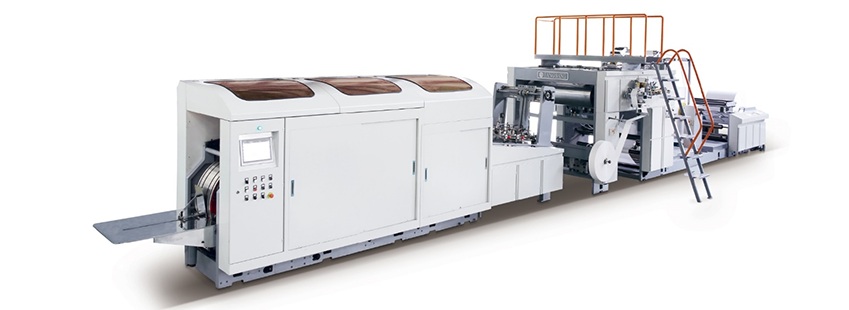
Here’s a perspective I’ve developed after talking to dozens of packaging business owners: the machine that prints your customer’s logo is the machine that keeps your order book full.
In today’s competitive packaging landscape, generic white paper bags are a race to the bottom. What wins contracts is custom printed paper bag production—branded bags that carry retail clients’ logos, color schemes, and marketing messages. That’s why many manufacturers now opt for integrated flexographic printing units right on their production line, enabling one-pass printing and bag making.
Beyond printing, customization options include:
Dual-layer pasting for extra-strength e-commerce shipping bags
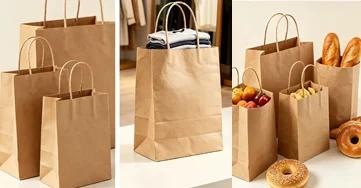
Die-cut window units for bakery and pastry bags that showcase products
Patch handle units for reinforced handles on luxury retail bags
Twisted-paper rope handle attachments for high-end shopping bags
Fangbang’s modular machine architecture supports these add-ons, allowing you to start with a core configuration and upgrade as your business grows. This is where the conversation shifts from “buying a machine” to investing in a scalable production system.
Not every buyer needs the same level of automation. Let me contrast three common approaches so you can see where each fits.
Manual/semi-automatic production offers the lowest upfront investment—typically $20,000 to $70,000 for entry-level equipment. However, labor costs per bag are significantly higher, defect rates run 5% to 10%, and production speeds max out around 100 bags per minute. This works for niche boutiques or businesses testing the market, but it struggles to scale.
Fully automated paper bag machinery represents the mid-to-high tier, with investments ranging from $70,000 to $200,000 for robust systems capable of 100 to 200 bags per minute. Labor requirements drop to 1 to 2 operators per line, defect rates fall below 2%, and integrated printing capabilities add direct value. This is the sweet spot for established manufacturers.
High-speed integrated production lines above $200,000 push speeds beyond 250 bags per minute and often include inline printing, window patching, and multi-layer bag capabilities. These are the systems that supply major retail chains and global brands.
The choice isn’t about which technology is “best”—it’s about which configuration aligns with your order volume, bag types, and growth trajectory.
Buying industrial equipment is a leap of faith. But faith backed by data is a much safer bet.
Fangbang’s manufacturing infrastructure includes over 120 patents, 16 software copyrights, and ISO 9001 certification. The company operates two facilities totaling over 100,800 square meters, with world-class CNC machining equipment from DMG MORI (Germany), Nicolas Correa (Spain), and Doosan (Korea), plus ZEISS coordinate measuring machines for quality assurance.
For global buyers, the CE certification on every machine means compliance with European safety and environmental standards—a non-negotiable requirement for exporting paper bags into EU markets.
Here’s what that means on the factory floor: less downtime, fewer replacement parts, and a machine that runs consistently at its rated speed. Reliable paper packaging equipment isn’t just about uptime—it’s about predictable production schedules that let you confidently commit to customer delivery dates.
After two decades in this industry, I’ve seen too many buyers focus exclusively on the initial purchase price while ignoring what happens after the machine lands at their facility.
For buyers evaluating suppliers, leading vendors typically offer 12-month warranties covering core components including PLC systems, with delivery timelines ranging from 45 to 60 days. But the real differentiator is the ability to provide on-site training, remote diagnostics, and a responsive spare parts supply chain.
The paper bag market isn’t slowing down. With a projected CAGR of 6.3% from 2025 to 2026 and expectations to reach $8.86 billion by 2030, demand is accelerating faster than many manufacturers can keep up.
The question isn’t whether to automate. The question is how quickly you can make the transition before your competitors do. Whether you’re producing standard grocery bags, luxury retail handbags, or custom-printed promotional bags, the right production system transforms paper rolls into profit—one bag at a time.
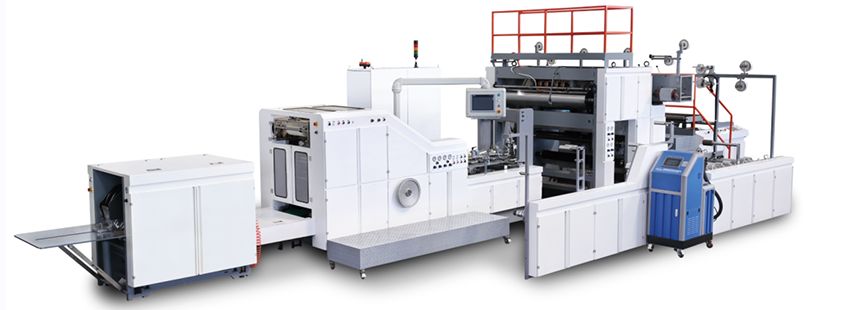
Full-Servo Automatic Square Bottom Paper Bag Making Machine for high-efficiency production of eco-friendly paper bags wi...
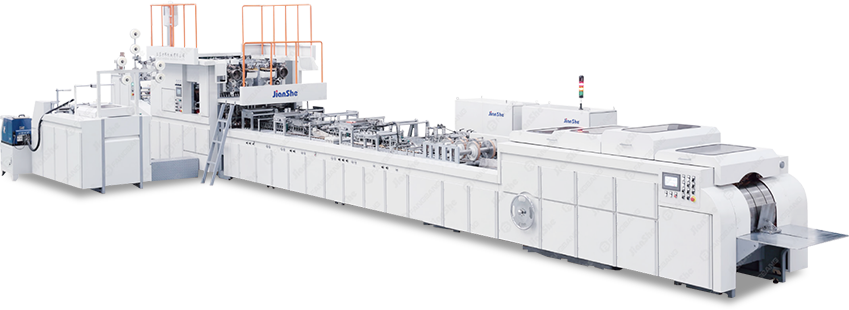
Fully Automatic Sheet-Fed Square Bottom Paper Bag Machine produces paper bags with handles at high speed. Uses sheet pap...
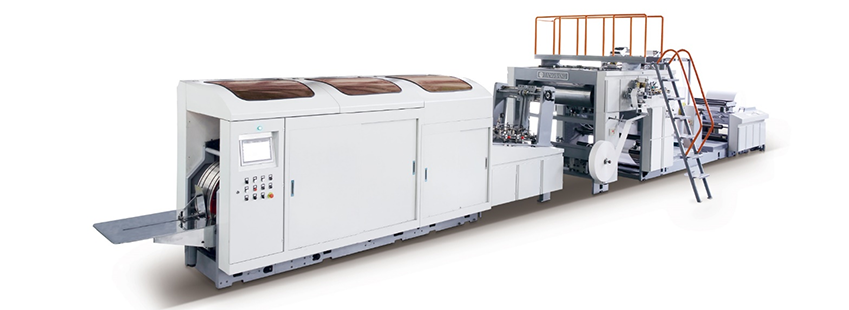
This machine is designed to manufacture square bottom paper bags with flat-rope handles from paper roll,paper patch roll...
GET A QUOTE




 中文
中文 English
 Español
 Français
 Pусский