
You know the feeling. One moment, the line is humming along nicely. Next, bags are coming out with splotchy bottom seals, uneven glue application, or worse—no glue at all. You stop the line, open the machine, and find a familiar mess: dried adhesive crusted around the glue pot, nozzles clogged with charred residue, and the glue transfer pulleys barely turning under layers of stubborn buildup.
The question isn’t whether you should clean the glue system. Everyone knows you should. The real question is: how often is often enough?
The answer, as frustrating as it sounds, is “it depends.” But after digging through manufacturer guidelines, maintenance logs from bag production facilities, and speaking with experienced technicians, there is a clear consensus. In fact, industry experts widely recommend a complete hot melt system cleaning at least twice a year for equipment under heavy use, with more frequent light cleaning and visual checks performed daily or after every shift.
Let me break down a practical, tiered cleaning schedule that will keep your glue system running smoothly—without turning cleaning into a full-time job.
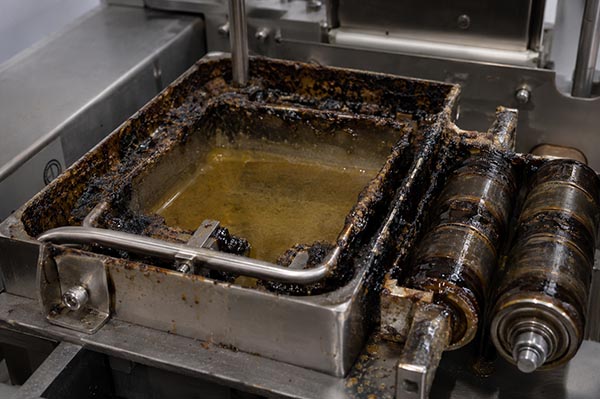
Before diving into the schedule, it’s worth understanding what happens when you let cleaning slide. When adhesive residue is left to sit, especially in hot melt systems, it undergoes a process called adhesive charring. Prolonged exposure to heat causes the glue to break down and form a burnt, gel-like residue that clogs hoses and nozzles.
The consequences? Uneven adhesive application leads to product defects. Reject rates climb. Downtime eats into production windows. Premature wear forces costly component replacements. In extreme cases, a neglected glue pot can take hours to clean—hours that could have been spent producing bags.
One maintenance manager put it bluntly: “Just five to ten minutes a day of wipe-down with a wet cloth will maintain feeding and folding performance from day to day. Don’t wait until the condition gets so bad that it takes hours to clean.”
The most effective maintenance approach combines daily light cleaning, weekly thorough cleaning, and quarterly deep cleaning. This tiered structure is widely recommended across the paper bag manufacturing industry.
Daily cleaning is non-negotiable. As one guideline points out, you should clean your equipment every day to stop dust and glue from building up. Focusing on the glue application system immediately after shutdown is especially important, when the adhesive is still warm and easier to remove.
What to clean daily:
Wipe down glue rollers, glue transfer pulleys, and applicator nozzles using a soft cloth or brush to remove excess adhesive
Clean the glue pot exterior and surrounding areas where adhesive may have dripped
Remove paper dust and debris from the glue application zone—these particles mix with adhesive and accelerate clogging
Most importantly: Purge the system immediately after the last job of the shift. Never let glue dry inside the system.
For side gluing components specifically, you should wash them thoroughly at the end of each shift. The standard procedure: first disassemble the glue transfer pulley and side glue scraper for washing, then clean the gluing pulley directly on the machine.
Once a week, take the cleaning a step further. While daily cleaning handles surface-level residue, weekly cleaning reaches the nooks and crannies that daily wipe-downs miss.
What to clean weekly:
Inspect and clean hoses and hose fittings. Wipe off dust and debris daily, but do a more thorough check weekly for adhesive buildup that may have crept into fittings.
Clean the conveyor belts, guides, and any cutting blades near the glue application area
Use compressed air to blow out paper dust from tight spaces around the glue system components
Check for hardened glue buildup in the glue tank, nozzles, and applicators that daily cleaning might have missed, and remove using a dedicated cleaning solution
Manufacturers also recommend performing a complete inspection of the glue applicators, hoses, and nozzles weekly to identify any early signs of wear or malfunction.
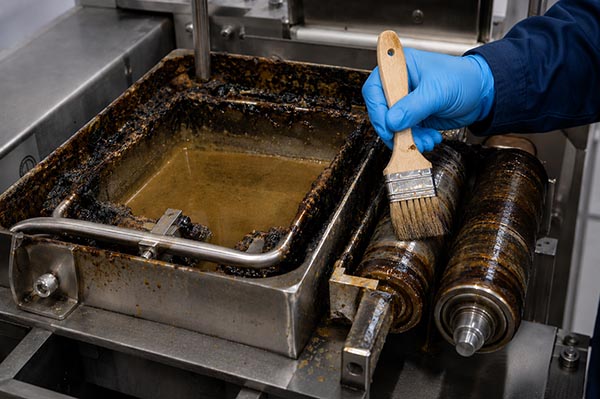
This is the big one. Most manufacturers recommend a complete hot melt system cleaning twice a year for systems with heavy use. However, for production lines running multiple shifts or handling high-viscosity adhesives, quarterly cleaning—about every three months—is the safer bet. Industry sources note that hot melt systems and equipment should be purged and cleaned thoroughly every three months, or each time you switch to a different adhesive.
What deep cleaning entails:
Shut down the machine completely and allow the glue system to cool down
Remove as much remaining adhesive as possible from the glue pot using a scraper or spatula
Apply a specialized hot melt surface cleaner or purge solution to dissolve stubborn residue, let it sit for the recommended time, then wipe away with a clean cloth
For purge cleaning, pour the cleaner into the hot melt system’s tank, set the temperature per manufacturer instructions, let it circulate until the reservoir is clean, then drain
Scrape away any remaining char and discard the first few minutes of adhesive from the tank after the deep clean
Inspect pump seals and connectors for wear, and check belts and conveyors for adhesive deposits
| Cleaning Level | Frequency | Time Required | Key Actions |
|---|---|---|---|
| Daily (Per Shift) | Every shift end | 5–15 min | Wipe rollers & nozzles, purge system, remove excess glue, clean glue plate exterior |
| Weekly | Once per week | 20–30 min | Clean hoses & fittings, blow out paper dust, inspect for wear, deep-clean glue tank exterior |
| Quarterly | Every 3 months or per adhesive change | 1–2 hours | Full tank purge & scrub, clean nozzles & hoses internally, inspect seals & connectors |
Cleaning alone won’t solve everything. Some issues originate elsewhere in your operation. Here’s what else matters:
Running your hot melt at the correct temperature is critical. Higher temperatures—especially during idle times—are the biggest contributors to adhesive charring. As an added precaution, implement a temperature setback that gradually reduces temperature when the unit is not actively in use. Temperatures that are too low can also cause stringing of adhesives, creating its own set of problems.
Not all adhesives behave the same way. Low-quality hot melts degrade faster when exposed to prolonged heat, leading to more frequent charring. Work with your adhesive supplier to choose a formula compatible with your production speed, operating temperature range, and paper stock.
A glue pot that runs low on adhesive leaves residue on the tank walls exposed to oxygen. This combination of heat and oxygen accelerates burning. Keep the tank filled to the proper level to minimize this effect.
A clean glue system is the single most cost-effective preventive measure you can take. Regular cleaning reduces the risk of charring, prevents nozzle clogs, ensures consistent adhesive application, and extends the service life of every component in the glue delivery path.
Daily cleaning takes less than 15 minutes. Weekly cleaning takes another half hour. Quarterly deep cleaning takes an afternoon. Compare that to the hours of downtime—and thousands in lost production and repair costs—that come from a severely clogged glue system.
The math isn’t complicated. A disciplined cleaning schedule pays for itself many times over in reduced downtime, lower reject rates, and extended machine life.
Even the best cleaning schedule can only compensate so much. The glue system’s underlying design and build quality have a significant impact on how much residue accumulates and how easy it is to remove.
If you’re evaluating equipment that makes maintenance more straightforward—with accessible glue components, clear service access points, and support for standardized cleaning procedures—explore the technical specifications and maintenance-friendly features of reliable automatic square bottom paper bag machines.
In the end, cleaning frequency isn’t about following a rigid rule. It’s about understanding your production volume, adhesive type, and equipment design, then building a habit that keeps your glue system running at its best. Start with daily cleaning. Make it a ritual. Your future self—and your production manager—will thank you.
For questions about specific cleaning protocols or guidance on glue system maintenance for your production line, contact the technical team for application-specific recommendations.
Note: The images in this article are for reference only.
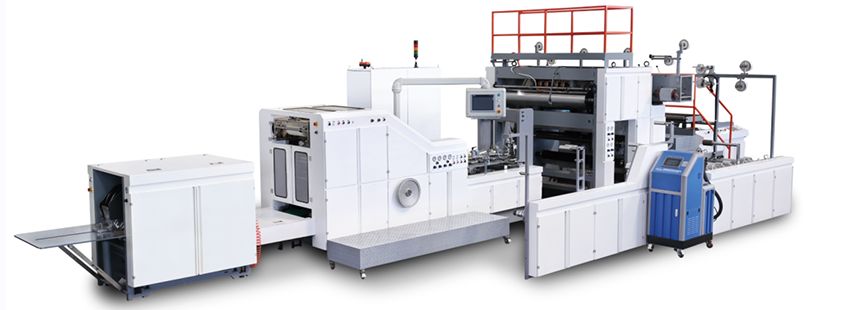
Full-Servo Automatic Square Bottom Paper Bag Making Machine for high-efficiency production of eco-friendly paper bags wi...
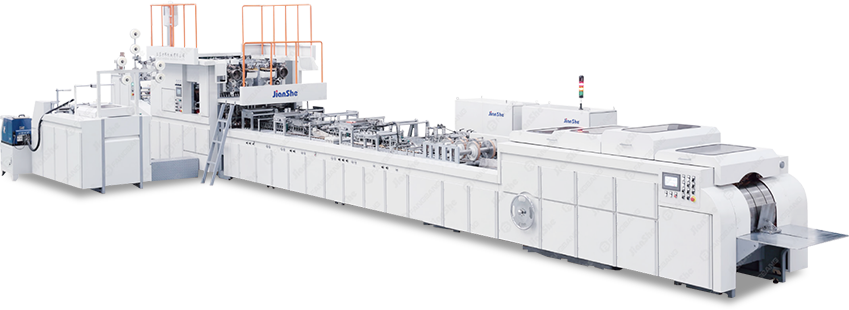
Fully Automatic Sheet-Fed Square Bottom Paper Bag Machine produces paper bags with handles at high speed. Uses sheet pap...
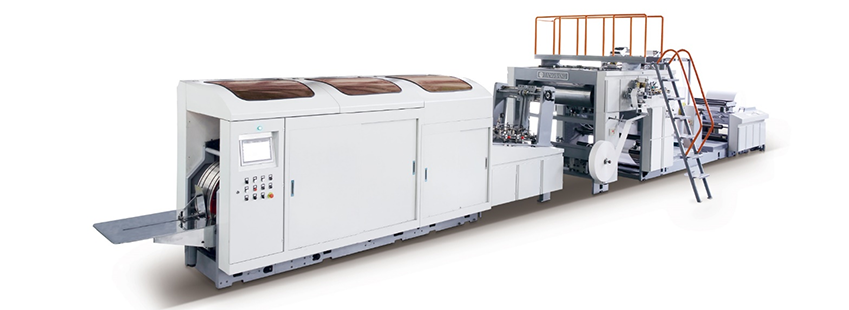
This machine is designed to manufacture square bottom paper bags with flat-rope handles from paper roll,paper patch roll...
GET A QUOTE




 中文
中文 English
 Español
 Français
 Pусский