
The global shift toward eco-friendly packaging has placed square-bottom paper bags at the center of retail, food service, and e-commerce logistics. As major economies roll out stricter bans on single-use plastics, manufacturers are racing to scale up production capacity. At the same time, however, a skilled operator shortage has made it harder than ever to maintain consistent quality across high-volume production lines. Many facilities find themselves caught between rising demand and shrinking technical expertise.
This is where full-servo automation changes the equation. By replacing traditional mechanical transmissions with independent servo drives on each motion axis, modern roll-fed bag-making systems deliver greater precision, faster changeovers, and dramatically shorter setup times. But owning advanced equipment is only half the battle—knowing how to configure it correctly is what separates a smooth production launch from a frustrating week of trial and error.
This step-by-step guide walks you through the complete setup process for a full-servo automatic square-bottom paper bag-making machine, from unpacking to first batch output.
(https://youtu.be/RVzbqKA7g9A?si=OytaPjVJLhp_LkvB)
Before powering on any equipment, proper machine placement is critical. Ensure the installation site has a level concrete floor with sufficient load-bearing capacity, typically over 8,500 kg for full-servo roll-fed models. Maintain at least one meter of clearance around the machine for maintenance access and safety.
Check that the power supply matches the machine’s specifications—most industrial paper bag making equipment operates on 380V, 50Hz three-phase power. Verify that compressed air lines are connected to pneumatic components such as material lifting systems and glue applicators. The unwinding unit requires particularly close attention: confirm that the hydraulic lifting mechanism and automatic tension control system are properly aligned to prevent paper tracking issues before they start.
A dedicated operator station with good visibility of the entire production line should be positioned within comfortable reach of the touchscreen HMI. This arrangement reduces reaction time during adjustments and improves overall workflow efficiency.
The unwinding unit is where material quality is either preserved or compromised. Begin by loading the paper roll onto the hydraulic lift—this system simplifies handling even for rolls up to 1500 mm in diameter. Once the roll is securely mounted on the shaft, set the automatic constant tension control. For kraft paper between 70–160 g/m², a starting tension setting of around 100–150 N consistently yields stable web travel. Lower-tension paper requires proportional reduction to avoid stretching; heavier paper may need slightly increased tension to maintain consistent web travel.
Activate the automatic edge position control (EPC) system and calibrate it to the paper’s edge. Most modern systems can hold lateral registration within ±0.5 mm throughout the run. If the EPC drifts, double-check that the paper roll is centered on the shaft and that the edge sensor has a clear, unobstructed view of the material.
For the efficient setup of unwinding parameters, including tension curves and edge-following sensitivity, you can explore preset configuration options designed to minimize trial-and-error adjustments.
With the paper properly unwound, thread it through the machine following the manufacturer’s path diagram. Pay special attention to the guide rollers—each one should rotate freely and remain parallel to the machine frame. Any misalignment here will cause paper creasing or tracking drift downstream.
Install the forming plate according to the target bag size. The forming plate must be centered both longitudinally and transversely; a common error is rushing this step, which leads to uneven tube walls and wasted material. For transverse positioning, loosen the two mounting screws, use the center fixed bar to bring the plate to midline, then retighten. The clamp tray should leave a 1–2 mm gap to the paper tube edge—too tight and the paper will tear; too loose and the tube won’t stay aligned. Also, confirm that the side gluing mechanism is positioned to apply adhesive precisely along the overlap seam without reaching the bag’s interior.
This step distinguishes full-servo systems from conventional machines. The full-servo architecture uses independent servo drives to control each motion axis—paper feeding, cutting, and bottom forming—enabling adjustments that would be impractical or impossible with mechanical linkages.
Access the HMI touchscreen and navigate to the configuration menu. Enter your target bag dimensions: bottom width, bag length, and bottom size. For a standard shopping bag, the system typically requires a bottom width between 80 and 290 mm and a bag length from 155–505 mm, depending on the specific model. The cutting length is controlled by the servo motor; input the desired tube cutting dimensions,n, and the PLC automatically calculates the optimal cutting position.
Set the speed profile for the initial test run. Begin at 40–60 bags per minute—a conservative starting point that lets you observe system behavior without high-speed stress. Full-servo models can achieve production speeds exceeding 200 bags per minute after verification, but patience during initial tuning prevents costly mistakes. The Siemens PLC system maintains consistent cut-to-cut accuracy regardless of speed, but verifying this at lower speeds first is always good practice.
For precise bag dimension presets and size-change automation features, operators can reference the digital recipe management functions that store and recall production parameters at the touch of a button.
The square bottom mechanism is the heart of any paper bag machine, and its setup requires particular precision. Locate the bottom creasing unit and adjust the creasing depth so the paper folds crisply but does not cut through. If the crease is too shallow, the bag will not stand properly; if too deep, the paper fibers may rupture under load.
Next, configure the bottom gluing system. Modern machines apply glue directly to designated flap areas using precision applicators. Verify that the glue coverage is uniform and free of excess, which can bleed through the paper and cause rejects. The cam mechanism in the bottom-opening section controls how far the flaps stretch during forming—this may require fine-tuning based on paper thickness and bag dimensions. For heavier paper stocks around 150 g/m², slightly increased cam travel helps achieve clean bottom formation without tearing.
Before committing to full production, run a small batch of 50–100 bags at the initial low speed. Inspect each critical quality attribute:
Bottom squareness: The bag should sit flat and upright on its base
Seam integrity: Glue joints must be secure with no gaps or overflow
Bottom opening: The base should open fully without sticking
Paper tracking: No wrinkles or edge fraying along the tube length
Monitor the touchscreen for any alarm conditions. Common early issues include insufficient tension, misaligned photocell tracking, or incorrect cam timing. The PLC’s diagnostic system typically displays error codes for each of these conditions, allowing targeted corrective action rather than guessing at the root cause.
Once you’ve confirmed consistent quality, gradually increase production speed in increments of 20–30 bags per minute, verifying quality after each step until you reach the target rate. A full-servo system should maintain precision across the entire speed range without adjustment.
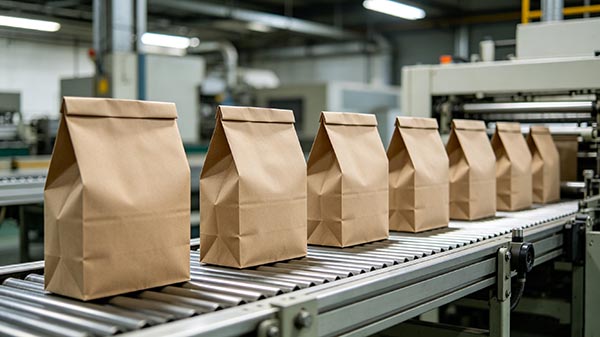
Even experienced operators occasionally overlook critical details. Here are three of the most frequent setup errors and their solutions:
Skipping the low-speed test run — Operators under production pressure sometimes bypass this verification step, only to discover alignment issues at full speed when waste material piles up rapidly. Always allocate 15 minutes for low-speed inspection before accelerating.
Misaligning the photoelectric registration sensor — For printed materials, the photocell must track registration marks accurately. If the sensor is even slightly off-center, cut lengths will wander and printed designs will misalign. Calibrate the sensor after every size change.
Neglecting tension consistency across the line — Tension drifts naturally as the paper roll diameter decreases from full to empty. Verify that the automatic constant tension control compensates across the entire roll; some systems require periodic calibration to maintain accuracy.
Many modern square bottom systems incorporate handle-making units—either round rope or flat rope,p e depending on the target market. Round rope handles are typical for standard shopping bags, while flat rope handles are preferred for premium retail and heavy-duty food packaging. The setup of these inline units follows similar principles: independent servo drives control handle cutting and gluing, with digital synchronization to the main machine’s speed and position.
For manufacturers planning to add handle production capabilities, evaluating the full-servo handle cutting architecture can pay dividends. Compared to traditional mechanical transmission, full-servo handle systems can reduce handle material waste by 6–8 kilograms per day and significantly shorten changeover time between different handle sizes.
Setting up a full-servo automatsquare-bottomtom paper bag-making machine demands attention to detail, but the reward is a reliable, high-speed production line capable of delivering consistent quality across millions of bags. The steps outlined above—positioning, unwinding, tube forming, servo calibration, bottom forming, and quality validation—form a repeatable process that operators can master with practice.
For businesses looking to upgrade their packaging operations, understanding the technical nuances of servo-driven square bottom machinery is essential. When selecting equipment, pay close attention to the control system architecture, the range of handle configurations supported, and the ease of digital parameter adjustment. These factors directly impact how quickly you can bring new bag sizes into production and how efficiently your line operates over the long term.
If you’re seeking a full-servo solution backed by advanced manufacturing expertise and responsive technical support, exploring the capabilities of a trusted brand partner is a natural next step. Whether you need round rope, flat rope, or dual-handle flexibility, the right equipment can transform your packaging efficiency from a bottleneck into a competitive advantage.
If you’re ready to explore a full-servo configuration tailored to your specific bag sizes, handle types, and production targets, consider reviewing the performance specifications from an experienced manufacturer. Professional guidance during the selection phase can make the difference between an equipment purchase that merely works and one that actively grows your business.
All product specifications and technical data provided are for reference purposes only. Please consult with equipment manufacturers for specific installation requirements and safety guidelines applicable to your facility.
Note: The images in this article are for reference only.
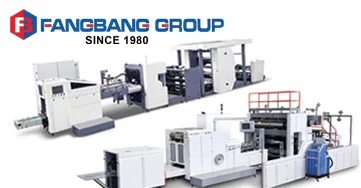
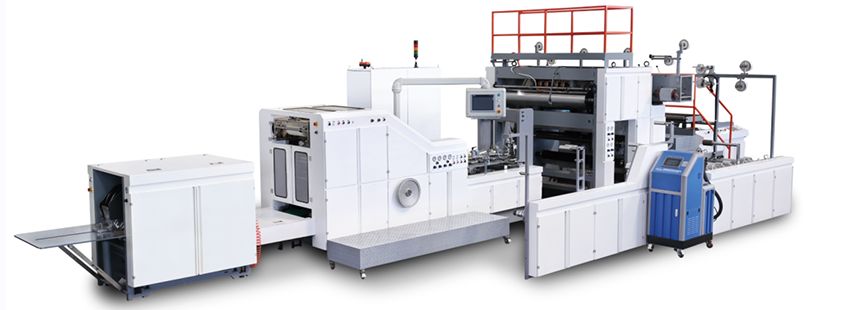
Full-Servo Automatic Square Bottom Paper Bag Making Machine for high-efficiency production of eco-friendly paper bags wi...
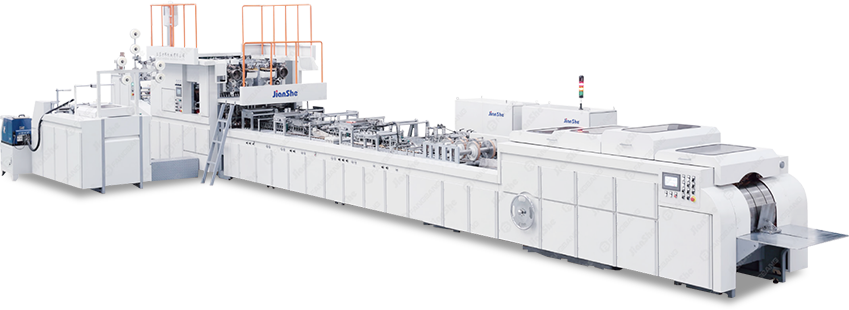
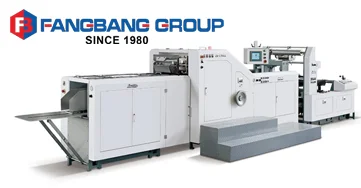
Fully Automatic Sheet-Fed Square Bottom Paper Bag Machine produces paper bags with handles at high speed. Uses sheet pap...
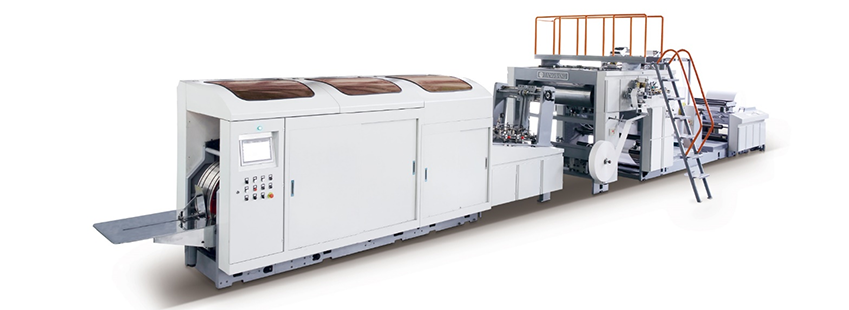
This machine is designed to manufacture square bottom paper bags with flat-rope handles from paper roll,paper patch roll...
GET A QUOTE




 中文
中文 English
 Español
 Français
 Pусский