
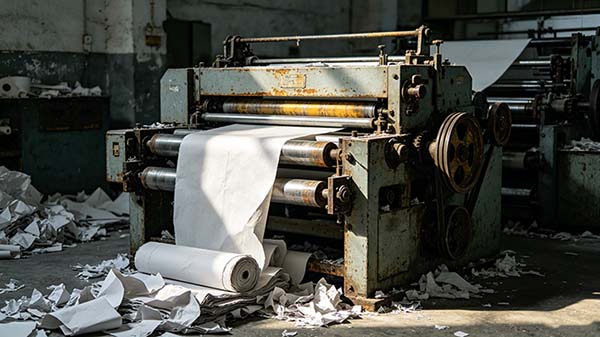
If you have been running a packaging converting line for more than a few years, you have probably noticed a recurring pain: mechanical drive paper bag machines are becoming harder to justify. Frequent cam adjustments, inconsistent bag lengths, high scrap rates during changeovers, and the ever‑present hum of clutches and brakes that need weekly attention.
One plant manager recently told me, “We spent more time tuning the machine than running it. Every order change meant 45 minutes of trial and error.” That is not manufacturing – that is a bottleneck. If these issues sound familiar, see how modern automated bag-making solutions address them– the data may surprise you.
So when suppliers start talking about “full‑servo” or “individual servo drives,” the natural question is: does the upgrade actually pay off? Or is it just another expensive promise?
Most conventional paper bag converting equipment relies on a main motor linked to cams, gears, and clutches. This design worked well in the 1990s. Today, with shorter runs, faster changeovers, and thinner recycled papers, its weaknesses show up directly on your P&L.
Mechanical adjustment time: Every bag length or bottom fold change requires loosening cams, moving limit switches, and test running until the registration matches. Average downtime per job: 25‑40 minutes.
Waste during setup: Each test run produces 50‑150 waste bags. Multiply that by 10 jobs per day – the scrap tonnage adds up fast.
Limited speed range: Running too slow wastes motor efficiency; running too fast causes misfeeds. The sweet spot is narrow.
Predictive maintenance impossible: Clutches wear unpredictably. One morning, you arrive to find the machine has been producing misaligned bags for two hours.
A 2023 study by the Converting Equipment Manufacturers Association (CEMA) found that mechanical bag makers operate at only 67% overall equipment effectiveness (OEE) on average, with unplanned downtime accounting for 18% of lost time.
In a full‑servo automatic bag-making system, each motion axis – unwinding, draw roll, bottom forming, cutting, and stacking – has its own dedicated servo motor controlled by a central PLC. There are no cams, no clutches, no mechanical linkages. The result is not just faster cycles; it is fundamentally different operational logic.
1. Changeover in seconds, not minutes
To switch the bag length, you type the new value on the HMI. The servos automatically reposition. Bottom forming patterns are stored as recipes. A full order change (length, paper type, bottom style) takes under 3 minutes. One Korean converter reported reducing changeover time from 32 minutes to 2.5 minutes after replacing their mechanical line.
2. Waste reduction of 60‑80%
Because the first bag after a recipe load is already in spec, setup waste drops to 5‑10 bags. During running, electronic gearing maintains perfect registration without drift. A European bag producer documented waste falling from 11% to 3.2% after installing servo drives.
3. Energy savings between 20% and 35%
Servo motors draw power only when moving and recover energy during deceleration. Mechanical systems waste energy through constantly spinning flywheels and friction clutches. Real‑world data from a 2024 packaging industry report shows that a full‑servo bag-making line running two shifts consumes 28% fewer kWh compared to an equivalent mechanical model.
4. Predictive diagnostics
Servo drives monitor torque, temperature, and position error in real time. If a bearing starts dragging, the system alerts you before the machine jams. That alone can save thousands in emergency repair costs and lost production.
| Parameter | Traditional Mechanical | Full‑Servo Automatic |
|---|---|---|
| Average setup time | 25‑40 min | 1‑3 min |
| Scrap per changeover | 80‑150 bags | 3‑10 bags |
| Maximum mechanical speed | 180‑220 | 250‑300 |
| Energy consumption per 10k bags | Baseline | –25% to –30% |
| Weekly maintenance hours | 2‑4 | 0.5 |
| Operator skill needed | High | Moderate |
| Unplanned downtime | 60‑100 hours | 10‑20 hours |
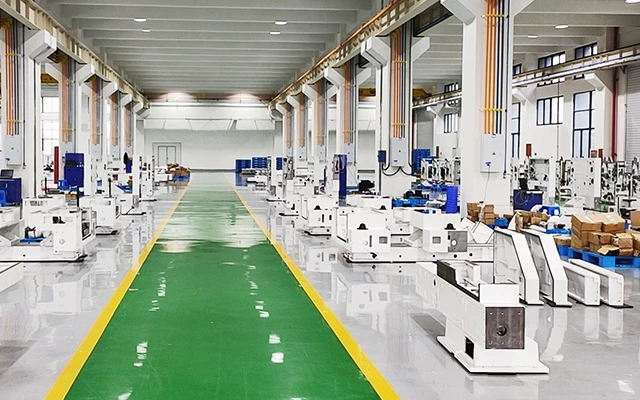
No technology is universally right. For a side‑by‑side comparison tailored to your bag sizes, check real‑world performance benchmarks. Based on analyzing dozens of converter cases, the break‑even point for a full‑servo automatic system versus a mechanical machine depends on three factors.
You are likely a good candidate if:
You run more than 3 order changes per shift.
Your average bag run length is under 50,000 pieces (the setup waste savings dominate).
You are experiencing rising labor costs or a shortage of skilled mechanics.
Your customers demand tighter tolerances (±0.5 mm or better).
You might wait if:
You run the same bag size for weeks without changing.
Your current mechanical machine is relatively new (under 3 years) and still under warranty.
You have very limited electrical maintenance capability (though many full‑servo suppliers offer remote support).
A simple payback formula:
Annual savings = (labor saved from faster changeovers) + (material saved from less waste) + (energy savings) – (additional servo maintenance contract)
From real customer data in Southeast Asia, one medium‑scale bag producer achieved payback in 14 months. Another in South America, with six changeovers per day, paid back in 9 months.
Some buyers hesitate because they have heard myths about servo systems being fragile or hard to troubleshoot. Let me address the two most frequent objections.
“Servo drives fail more often than clutches.”
Modern industrial servo drives have MTBF (mean time between failures) ratings above 50,000 hours – that is, over 5 years of continuous operation. Clutches typically need replacement every 8‑12 months in heavy use. The difference is that a clutch gives warning signs (slipping, noise), while a servo drive either works perfectly or stops completely. That is why predictive diagnostics matter: the controller will tell you when a drive’s life is below 90%.
“Our electricians only know mechanical systems.”
Valid point. However, full‑servo systems actually reduce troubleshooting complexity. Instead of chasing a misalignment through 20 cams, the HMI shows exactly which axis has a position error. Most manufacturers provide remote login support – your tech connects a laptop, and the supplier’s engineer can see the live waveform. That is far more efficient than flying in a mechanic. To see how remote diagnostics and recipe management work on a live system, explore a full‑servo bag-making system configuration.
The answer is rarely a simple yes or no. It depends on your mix of bag sizes, your acceptable waste level, and whether you have plans to automate further (e.g., integrating a stacker or palletizer – servo systems integration).
If you are currently running a mechanical line and feel that every setup is a battle, the data strongly favors full‑servo. The reduced stress on operators alone – no more crawling inside the machine to loosen cams – improves both morale and safety.
A practical next step: Before committing to any purchase, ask potential suppliers for two things:
A recorded cycle of an order change on their machine (actual time from the last good bag of job A to the first good bag of job B).
A waste calculation sheet based on your typical bag dimensions and paper grade.
You can also request a remote live demonstration. Many manufacturers now offer this without travel costs.
When you are ready to compare specific models, focus on the control architecture. Look for systems that store at least 500 recipes, offer Ethernet/IP or Profinet connectivity for future integration, and provide a clear torque monitoring screen for predictive maintenance.
For packaging converters who want to see real performance data and technical specifications, request a detailed performance analysis that includes case studies from similar production volumes. The right full‑servo system is not an expense – it is a competitive advantage that shows up on your scrap report and your changeover log.
Note: The images in this article are for reference only.
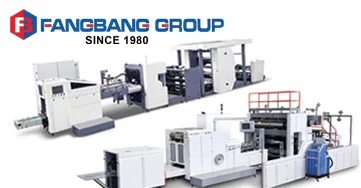
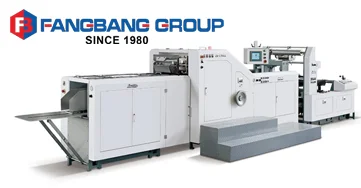
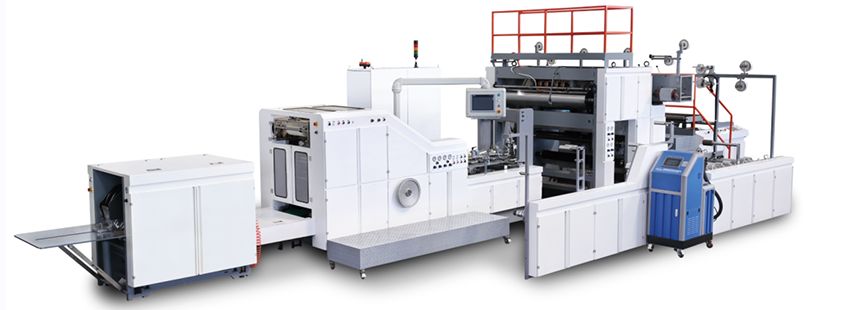
Full-Servo Automatic Square Bottom Paper Bag Making Machine for high-efficiency production of eco-friendly paper bags wi...
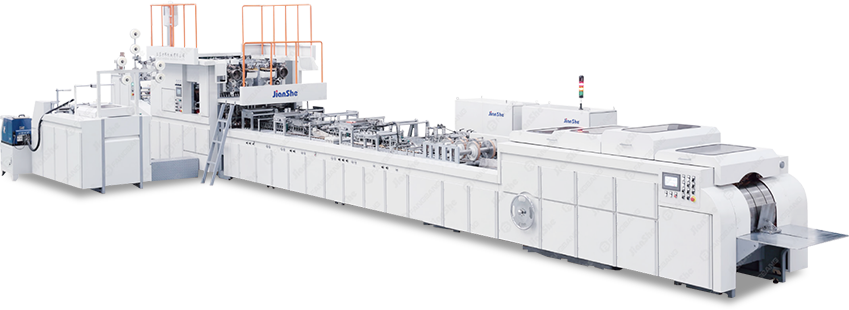
Fully Automatic Sheet-Fed Square Bottom Paper Bag Machine produces paper bags with handles at high speed. Uses sheet pap...
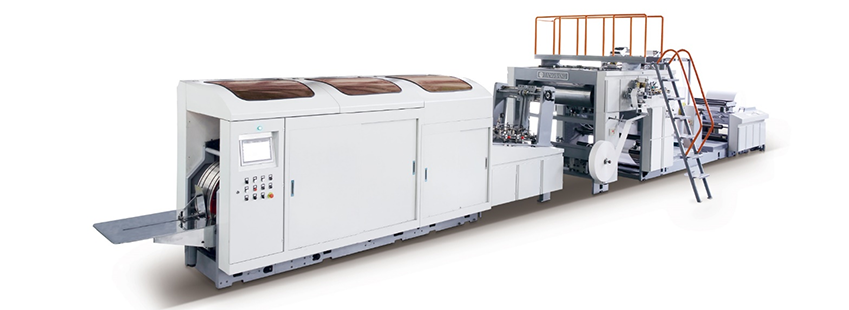
This machine is designed to manufacture square bottom paper bags with flat-rope handles from paper roll,paper patch roll...
GET A QUOTE




 中文
中文 English
 Español
 Français
 Pусский