
You have identified a gap in your local market. Retailers are switching from plastic to paper. Bakeries need branded carry-out bags. E-commerce sellers want sustainable packaging for shipments. The demand is there — but the equipment landscape can feel overwhelming.
For a small business, the first paper bag making machine is both an opportunity and a risk. Choose too basic a setup, and you will struggle to fulfill orders profitably. Over-invest in capabilities you do not need, and you will carry debt for machines that sit idle.
This guide is designed for small business owners and entrepreneurs entering paper bag manufacturing. It focuses on practical decision factors: order volume, bag types, material requirements, and realistic budgets. The goal is to help you identify which configuration — from basic roll-fed models to flexible sheet-fed systems — aligns with your actual production reality.
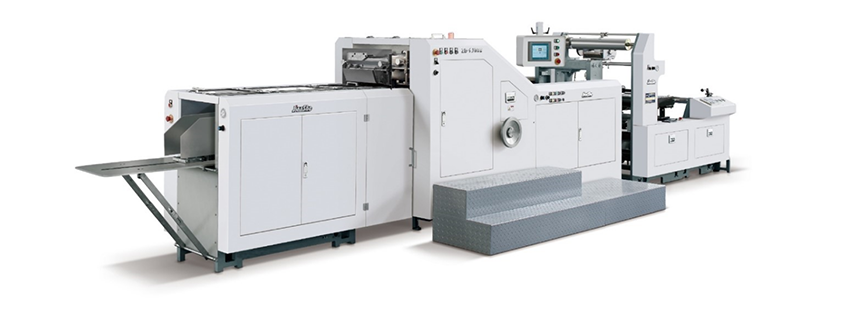
Paper bag making machines are generally classified by two primary characteristics: feeding method (how paper enters the machine) and automation level (how much manual intervention is required). For small businesses, the feeding method often determines which machine is even viable.
Roll-fed machines start with a continuous roll of paper. The machine unwinds the paper, forms the tube, cuts it to length, folds the bottom, applies glue, and ejects the finished bag — all in one continuous process. This is the most common configuration for high-volume production.
Fangbang‘s ZD-FJ series, for example, is a roll-fed square bottom paper bag machine that produces bags without handles at speeds up to 260 bags/min. For businesses focused on large volumes of standard bags, roll-fed offers the lowest cost per bag.
Sheet-fed machines start with pre-cut individual sheets of paper. Each sheet is fed into the machine one at a time and processed through forming, folding, and gluing stations. Fangbang‘s ZD-FP series is a sheet-fed machine that processes medium- and high-grade handbags using single sheets. The ZD-FP handles paper lengths of 310–630mm and paper widths of 400–1320mm.
Sheet-fed machines are slower — typically 80 bags/min — but they accept specialty papers that cannot be wound onto rolls, such as coated art paper and laminated board.
Another fundamental distinction is whether the machine can attach handles. For retail shopping bags, handles are often essential. For food service and e-commerce packaging, they are frequently unnecessary.
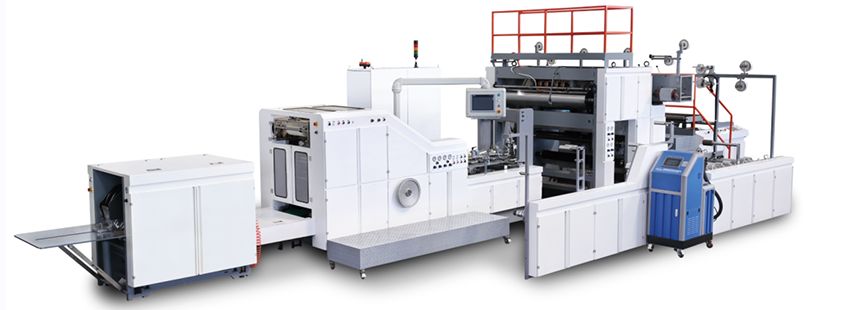
Fangbang offers handle-capable machines such as the ZD-QFJ full-servo automatic square bottom paper bag machine, which produces handled bags at 110–220 bags/min. The ZD-QFB is a fully automatic sheet-fed machine that produces handled bags using sheet paper, patch rolls, and rope.
For small businesses just starting, machines without handles (such as the ZD-FJ series) offer a lower entry price and simpler operation. You can always add handle capability later with a second machine or upgrade.
The right machine for your small business depends on three factors: order volume, bag variety, and material type.
| Monthly Volume | Recommended Configuration | Rationale |
|---|---|---|
| Under 50,000 bags | Sheet-fed or basic roll-fed | Lower initial investment; manageable with one operator |
| 50,000 – 200,000 bags | Roll-fed (ZD-FJ series) | Speed and efficiency justify the investment |
| Over 200,000 bags | Roll-fed with higher automation | Labor savings and consistency become critical |
For a business producing under 50,000 bags per month, a sheet-fed machine like the ZD-FP series offers flexibility without high cost. The ZD-FP can handle a wide range of paper types and sizes, making it suitable for short runs and frequent job changes.
For volumes above 50,000 bags per month, the speed advantages of roll-fed become compelling. The ZD-FJ series runs at 260 bags/min, meaning a single machine can produce over 120,000 bags in an 8-hour shift.
If you produce many different bag sizes and styles, changeover time becomes a critical cost factor. Fangbang‘s machines address this with a symmetrical, adjustable double template structure. For different sizes of paper bags, the user does not need to change the template; it can be quickly adjusted, effectively reducing size adjustment time.
The ZD-FJ series offers tube length adjustment from 130mm to 770mm, providing flexibility across a wide range of bag sizes. The ZD-FP series handles paper lengths from 310mm to 630mm.
If you plan to run standard kraft paper in the 45–130 g/m² range, roll-fed machines like the ZD-FJ series are well-suited. The ZD-FJ06 Fast Fixed-size machine, for example, handles paper thickness of 55–70 g/m².
If you need to run coated art paper, laminated board, or heavier stocks up to 160 g/m², sheet-fed machines like the ZD-FP or handle-capable ZD-QFB may be required. For high-speed applications with specialty papers, the ZD-J20S/D full-servo flat bottom machine uses 9 servo motors and reaches speeds of 1800 bags/min — though this level of speed and automation is typically beyond the needs of most small businesses.
Beyond machine specifications, several practical factors influence the right choice for a small business.
Entry-level machines typically require 20–40 square meters of floor space, depending on the model and whether additional units (printing, handle attachment) are included. Roll-fed machines require space for paper roll storage — rolls can be up to 1500mm in diameter.
Power requirements vary. The ZD-FJ series, for example, requires three-phase industrial power. Check your facility‘s electrical capacity before purchasing.
Fangbang‘s machines incorporate intelligent control technology that allows operators to adjust machine parameters quickly and accurately through simple settings. This reduces the learning curve for new operators.
However, even with user-friendly controls, some training is essential. For small businesses, the availability of training and technical support from the supplier should be a factor in the decision.
Many small businesses start with one machine and add others as they grow. A common path is:
Year 1: Start with a basic roll-fed machine without handles (ZD-FJ series) for high-volume standard orders.
Year 2: Add a sheet-fed machine (ZD-FP series) for premium, short-run, and specialty paper orders.
Year 3: Add handle capability with a ZD-QFJ or ZD-QFB if demand for handled retail bags grows.
The ZD-FJ+T+D+W+P multi-function roll-fed machine offers another path: it allows you to embed functional units — flexo printing, dual-layer pasting, die-cut window making, or patching and punching — between the unwinding unit and tube forming unit. This means you can start with a basic configuration and add capabilities as your business grows, without replacing the entire machine.
A small business owner secures contracts with 15 local bakeries and coffee shops. Monthly demand: 80,000 square bottom bags without handles, in three standard sizes. No printing — bakeries apply their own stickers. Initial capital: $25,000.
Recommended configuration: ZD-FJ series roll-fed machine without handles. At 260 bags/min, this machine can produce the monthly volume in approximately 5 hours of runtime. No handle modules means lower cost and simpler maintenance. Paper thickness range of 45–130 g/m² covers standard kraft bakery bags.
Why this works: Consistent volume, limited size variety, and no handle requirement make roll-fed the most cost-effective choice.
A new business serves local retailers with custom gift bags. Monthly demand: 25,000 bags across 8 different sizes and 5 paper types. Orders often use coated or art paper. Handles required on about 40% of orders.
Recommended configuration: ZD-FP series sheet-fed machine as the core, with handle capability added via a separate handle attachment unit or a ZD-QFB when volume justifies it. For printing, use pre-printed sheets.
Why this works: Sheet-fed design accommodates the wide variety of paper types and sizes characteristic of boutique gift bag orders. The ZD-FP handles paper widths up to 1320mm, covering most gift bag sizes.
For a deeper understanding of how different machine configurations serve specific market segments, explore the complete paper bag machine product lineup covering both roll-fed and sheet-fed models.
Before committing to any machine, ask these questions:
What is the changeover time between bag sizes? Fangbang‘s adjustable double template structure reduces this time significantly, but ask for specific numbers for the models you are considering.
What paper thickness range does the machine handle? The ZD-FJ06 handles 55–70 g/m²; the ZD-FJ21+PE+S handles 80–170 g/m²; the ZD-QFB handles 70–160 g/m². Match this to your planned materials.
What spare parts are included? Blades, belts, and glue nozzles wear out. Know lead times and costs for replacements.
Is training included? For small businesses, operator training can be as valuable as the machine itself.
What is the warranty and service coverage? A machine is only as valuable as the support behind it. Know where the nearest service technician is located.
For practical answers to common questions about material compatibility, size adjustment, and maintenance, review this FAQ on product common inquiries and operational considerations. covering real-world operational considerations.
The shift from plastic to paper packaging is not a temporary trend. It is driven by regulation, consumer preference, and corporate sustainability commitments. For small businesses, this means growing demand from local retailers, restaurants, and e-commerce sellers who need paper bags.
Starting with a machine that matches your early order volumes allows you to learn production processes, build customer relationships, and refine your product quality without excessive debt. As your business grows, you can add capabilities — handle attachment, printing, higher speed — in a measured way.
The alternative — buying the largest, fastest machine from day one — often leads to idle equipment and financial pressure to accept unprofitable orders just to keep the machine running. For most small businesses, a measured approach is the more sustainable path.
Once you have worked through these questions — your monthly volume, bag types, material requirements, and realistic budget — comparing specific equipment specifications becomes the logical next step. Each of the configurations discussed here comes with trade-offs in speed, flexibility, and cost. Understanding which parameters (paper thickness range, speed, handle compatibility, power requirements) align with your actual order history will determine which machine delivers the best return for your specific business situation.
For a structured comparison across different machine types and their cost implications for small operations, read the guide “Roll-Fed vs Sheet-Fed Paper Bag Making Solution,” which breaks down the feeding method decision and its impact on production economics.
Roll-Fed vs Sheet-Fed Paper Bag Making Solution
Square Bottom or V-Bottom Paper Bag Machine – Which Suits You?
5 Common Pain Points in Paper Bag Making Solution
Reduce Downtime with Smart Paper Bag Making Solution
From Roll to Bag: Understanding the Complete Paper Bag Making Process
Full-Servo Automatic Square Bottom Paper Bag Making Machine for high-efficiency production of eco-friendly paper bags wi...
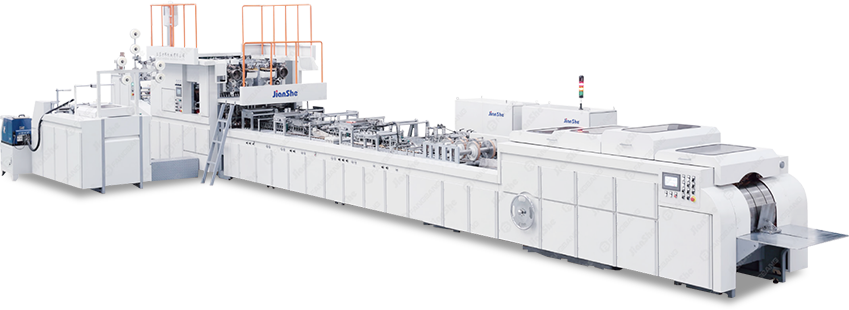
Fully Automatic Sheet-Fed Square Bottom Paper Bag Machine produces paper bags with handles at high speed. Uses sheet pap...
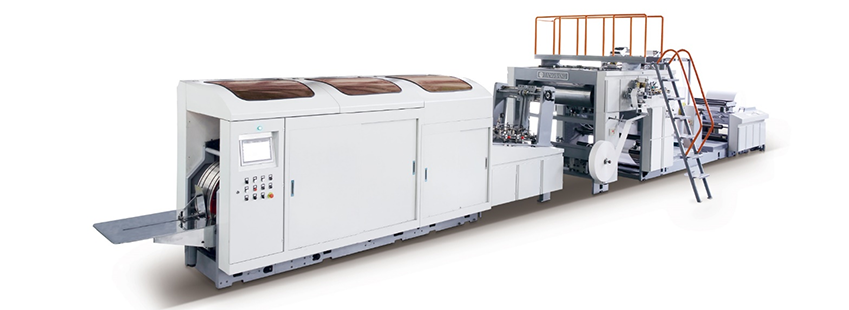
This machine is designed to manufacture square bottom paper bags with flat-rope handles from paper roll,paper patch roll...
GET A QUOTE




 中文
中文 English
 Español
 Français
 Pусский