
Every packaging manufacturer running daily bag forming operations will encounter recurring operational troubles that drag down profit margins and disrupt delivery schedules. For mid-to-large packaging factories, a well-calibrated Paper Bag Machine is fundamental to stabilize continuous production, yet most generic production lines fail to adapt to complex order demands and diverse paper materials.
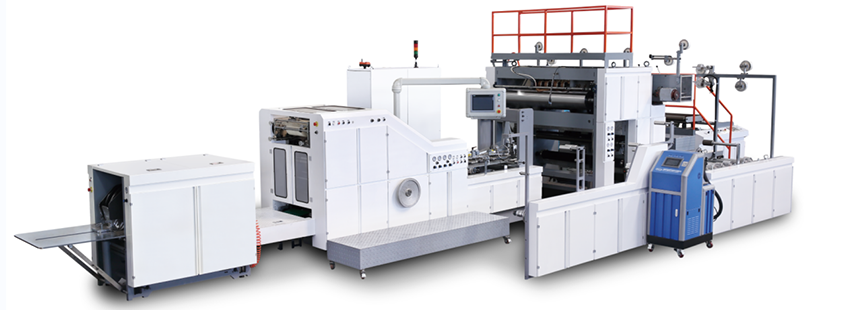
In actual workshop operation, uneven bottom folding, offset gluing and wrinkled bag surfaces are the most common quality failures. Many budget-oriented production units adopt outdated transmission structures, unable to cope with multi-specification kraft paper and coated paper switching. Irregular tension control leads to mass defective goods, forcing factories to spend extra labor on manual screening and rework.
From years of on-site debugging experience, I firmly believe that mechanical synchronization is the core solution. High-standard industrial configurations use full servo linkage to balance feeding, folding and bonding procedures, greatly lowering defective rates. If you want to learn about high-stability structural designs for long-hour operation, you can check core equipment configurations.
Nowadays, packaging orders are moving toward small batches and diversified customization. Many traditional production units require manual disassembly, mold replacement and repeated parameter debugging when switching bag sizes. The whole process often takes several hours, seriously limiting the flexibility of mixed order arrangement.
This rigid design cannot keep pace with the fast iteration of retail packaging demands. Advanced modular adjustment structures allow operators to complete size replacement through digital parameter setting and quick locking parts. This subtle upgrade can save hours of ineffective working time every day and greatly improve workshop operational flexibility.
Raw paper, environmental glue and auxiliary consumables account for the largest proportion of bag making costs. Outdated equipment has inaccurate cutting positioning and excessive glue output, resulting in serious unnecessary loss. Many operators ignore this hidden consumption, which gradually erodes overall profits in long-term mass production.
Precision cutting modules and intelligent quantitative gluing systems are essential for cost control. Reasonable mechanical design can effectively reduce leftover materials and adhesive waste, creating tangible cost advantages for long-term continuous production. Enterprises focusing on long-term development must pay attention to this hidden consumption indicator rather than only focusing on equipment purchase price.
Unexpected shutdowns caused by mechanical failure, part wear and sensor errors are a nightmare for delivery-critical orders. Some low-cost manufacturing units lack heat dissipation design and wear-resistant accessories, unable to support 24-hour uninterrupted industrial operation. Frequent stops for maintenance not only delay orders but also increase after-sales maintenance costs.
Reliable industrial-grade design focuses on heat resistance, wear resistance and fault self-checking functions. Standardized component layout and easy-maintenance structure can reduce daily maintenance difficulty and extend continuous running time, which is an indispensable condition for large-scale packaging processing plants.
Many entry-level bag making devices only support single-style ordinary shopping bags, unable to expand to special styles such as square-bottom food bags, hand-held gift bags and oil-proof takeaway packaging bags. When market demands change, enterprises have to repurchase new equipment, resulting in serious capital waste.
Customized expansion capability has become a key evaluation standard for modern processing equipment. Mature brands reserve upgrade interfaces for functional modules, which can add handle mounting, surface embossing and special coating adaptation according to later business needs, helping enterprises respond to market changes flexibly.To know more about personalized upgrade schemes for production lines, you can explore customized service cases.
To help factory owners make objective judgments, it is necessary to compare different processing methods in combination with actual production scenarios.
Semi-automatic manual assisted forming equipment has low initial investment, but relies heavily on manual operation, with slow speed and unstable finished product consistency. It is only suitable for small workshops with extremely low output demand and has no scalable value.
Integrated hybrid processing lines can realize multi-process combination, but the overall structure is complicated, with high failure rate and difficult daily maintenance, not suitable for long-term high-load use.
Paper Bag Machine provides a balanced solution between efficiency, quality and operational cost. It features standardized forming logic, strong material compatibility and controllable later maintenance cost. Compared with other types of processing equipment, it performs better in mass standardized production and multi-style flexible production, becoming the preferred option for most medium and large packaging manufacturers.
As a brand deeply engaged in packaging machinery manufacturing for years, FangBang always starts from front-line production pain points, abandoning flashy redundant designs and focusing on practical industrial performance optimization.
All independently developed production units adopt full servo control, high-precision transmission accessories and humanized operation logic, effectively solving quality instability and slow switching efficiency. Meanwhile, the brand provides one-stop tailored production line design according to customer’s factory space, order types and daily output. Complete pre-sales testing, on-site installation guidance and global after-sales technical support fully reduce the operational risk for buyers.
For enterprise users who plan to upgrade old lines or expand production capacity recently, you can acquire professional factory selection guidance to match the most suitable solution.
The five major pain points in paper bag making are not isolated mechanical problems, but comprehensive contradictions caused by mismatched equipment and production demands. Blindly pursuing low-price equipment will only bring continuous hidden troubles in later operation.
Choosing a production solution with stable performance, flexible adjustment, low consumption and expandable functions is the core way to break the operational bottleneck. With the continuous upgrading of environmental protection packaging policies, investing in high-quality, adaptable bag making systems is also a key step to seize future market opportunities.
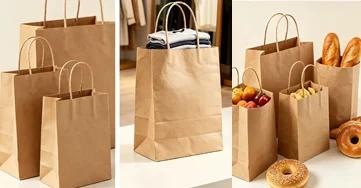
Full-Servo Automatic Square Bottom Paper Bag Making Machine for high-efficiency production of eco-friendly paper bags wi...
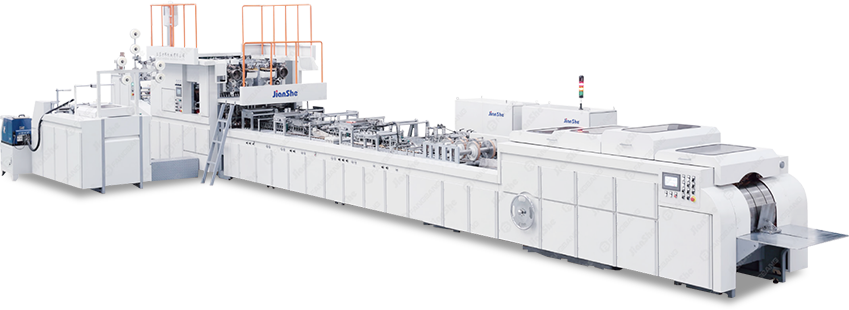
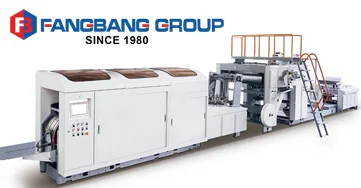
Fully Automatic Sheet-Fed Square Bottom Paper Bag Machine produces paper bags with handles at high speed. Uses sheet pap...
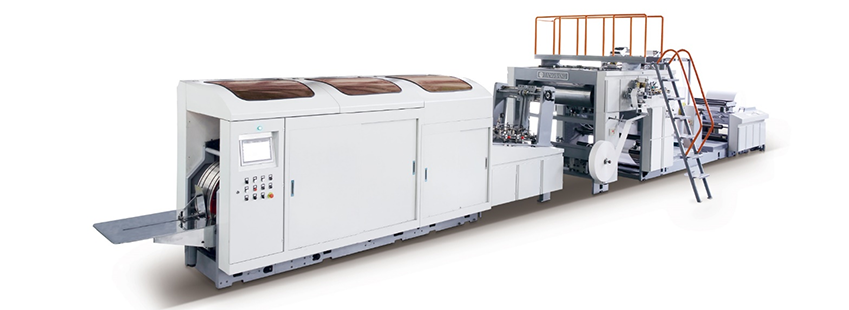
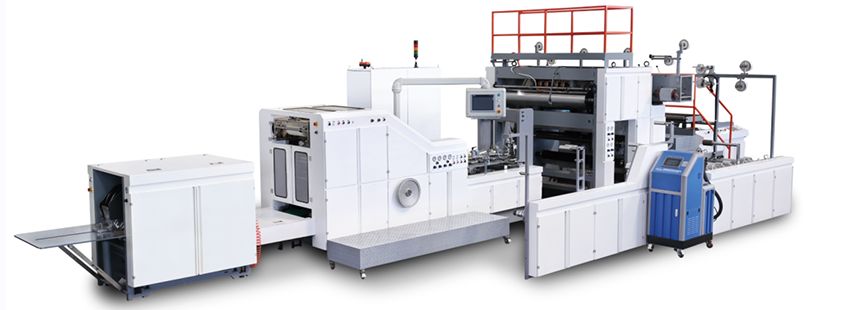
This machine is designed to manufacture square bottom paper bags with flat-rope handles from paper roll,paper patch roll...
GET A QUOTE




 中文
中文 English
 Español
 Français
 Pусский