
A cement plant needs 50 kg valve sacks that can be filled at 2,000 bags per hour with dust-free precision. A supermarket chain requires 200,000 shopping bags with flat rope handles that stand upright on shelves. These two orders come from completely different worlds — and the production lines that serve them are built around entirely different machine configurations.
Valve bags and square bottom paper bags are both made from paper, but their production processes, machine types, and end-use applications could not be more different. One is designed for industrial bulk packaging — cement, chemicals, fertilizers — where filling speed and dust control are paramount. The other serves consumer retail — shopping bags, gift bags, food packaging — where presentation, handle attachment, and bag aesthetics drive the production line design.
This guide compares the valve bag making machines and square bottom paper bag machine production lines side by side. You will learn how each machine configuration is built, what industries they serve, and how to match your production line to your target market.
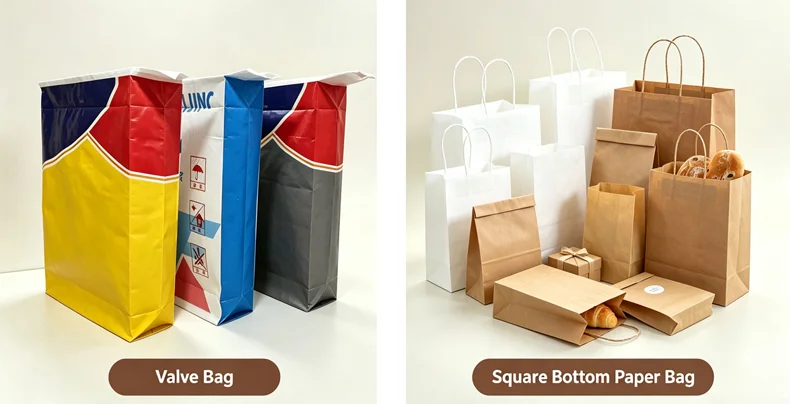
Before comparing production lines, it is essential to understand what each bag type actually is.
A valve bag is a specialized industrial sack with a small opening — called a valve — built into the top or bottom corner. During filling, the valve mates with a filler spout; after filling, the valve self-closes under product pressure. The bag is sealed at both ends, leaving only the valve path for filling.
Valve bags are widely used for packaging powders, granular materials, and other bulk items — including cement, chemicals, building materials, fertilizers, feed, and food additives. A typical 4‑ply valve sack routinely holds 25 to 50 kilograms of material. The bag features a self-closing mouth that enables easy filling from a filling machine and can be sealed automatically, reducing the need for manual labor.
A square bottom paper bag — also known as a block bottom, flat bottom, or SOS bag — has a rectangular base that allows the bag to stand upright on its own. These bags are designed for consumer-facing applications: food packaging, retail shopping, apparel, gift, and other consumer packaging applications.
Square bottom bags can be produced with or without handles, with various handle types (round rope, flat rope), and with inline printing capabilities. They typically carry 2 to 5 kilograms for standard retail applications — far lighter than industrial valve sacks.
| Valve Bag | Square Bottom Paper Bag | |
|---|---|---|
| Primary market | Industrial bulk packaging | Consumer retail packaging |
| Typical load | 25–50 kg | 2–5 kg |
| Bag closure | Self‑closing valve; both ends sealed | Open top (with or without handle) |
| Filling method | Automated filler spout through valve | Manual or semi‑automated top filling |
| Key design feature | Valve opening for dust‑free filling | Flat base for upright shelf display |
A valve bag production line is fundamentally different from a square bottom paper bag line. It typically involves two separate machines working in sequence: a tuber machine and a bottomer machine.
The tuber machine is the first machine in the valve bag production line. Its main function is to convert flat reels of multi‑ply paper into a continuous paper tube. Fangbang‘s paper sack tuber machine produces various sized sack tubes (step‑type and straight‑type) using roll paper and PE film as raw materials. This machine operates at 200–350 pieces per minute with a cutting accuracy of ±2mm.
What this means for production: The tuber machine determines the structural integrity of the valve bag. Multi‑ply construction is essential for industrial applications because valve sacks must withstand 25–50 kg of material without failing during filling, stacking, or transport.
The bottomer machine completes the transformation into a usable bag by sealing the bottom and integrating the valve. Fangbang‘s paper sack bottomer produces various sized paper sacks by taking paper or paper+film tubes as raw materials. This machine operates at 80–220 pieces per minute with valve paper thickness of 80–120 g/m².
Key features of valve bag production:
Quick plate changer: A patented quick‑change device enables easy locking and unlocking of the knife plate, especially suitable for multiple varieties and small batches
Automatic levelling and coding: Rollers flatten surface undulations and wrinkles, while a piston rod squeezes air to remove dust and improve coding results
Clean room production: All‑sealed design with dust removal ports enables dust‑free production — not only environmentally friendly but also protective of operator health and product quality
The quality inspection device inspects each valve bag. Bag weight error is controlled within a very small range — for example, 25kg ± 0.1kg. This level of precision is essential for industrial applications where accurate fill weights directly impact product cost and customer satisfaction.
Production Line Speed
Valve bag production lines can achieve average production of 2,000 bags per minute — three times the average speed of the industry. This extraordinary speed reflects the high‑volume, low‑margin nature of industrial packaging.
For a detailed look at valve bag machine specifications and configurations, explore Fangbang‘s valve bag making machine product lineup.
A square bottom paper bag production line is typically a single‑machine, inline process — not two separate machines. The bag is formed, folded, glued, and sealed in one continuous operation.
Square bottom paper bag machines take paper (either from a roll or as individual sheets) and complete the entire bag in a single pass. Fangbang‘s multi-function roll-fed square bottom paper bag machine, for example, implement paper feeding, tube forming, tube cutting, and bottom forming in a single inline process.
Key configurations for square bottom production:
| Machine Series | Feeding Method | Handle | Speed | Key Application |
|---|---|---|---|---|
| ZD-FJ series | Roll‑fed | No handle | Up to 260 bags/min | Food industry, e‑commerce, bulk packaging |
| ZD-FP series | Sheet‑fed | No handle | 80 bags/min | Luxury paper bags, premium shopping bags |
| ZD-QFJ series | Roll‑fed | Round rope | 110–220 bags/min | Supermarkets, gift shops, and food packaging |
| ZD-QFB series | Roll‑fed | Flat rope | — | High‑end retail, branded packaging |
| Multi‑Function (ZD-FJ+T+D+W+P) | Roll‑fed | Optional add‑ons | — | Flexo printing, window making, and patching |
Adjustable double template structure: For different sizes of paper bags, the user does not need to change the template — it can be quickly adjusted, reducing size adjustment time
Full‑servo control: The ZD-QFJ series uses independent servo motors for paper feeding, cutting, and bottom forming, delivering precision and faster changeover
Handle compatibility: Square bottom machines can be equipped with round rope handles (ZD-QFJ), flat rope handles (ZD-QFB), or no handles (ZD-FJ/ZD-FP)
Inline printing: The multi‑function machine embeds flexo printing, dual‑layer pasting, die‑cut window making, or patching between the unwinding unit and tube forming unit
Square bottom machines typically operate at 110–220 bags/min for handled retail bags (ZD-QFJ series) and up to 260 bags/min for no‑handle roll‑fed machines. Sheet‑fed models run slower at 80 bags/min because they handle heavier specialty papers.
| Comparison Factor | Valve Bag Production Line | Square Bottom Paper Bag Production Line |
|---|---|---|
| Line configuration | Two‑machine (tuber + bottomer) | Single‑machine (inline) |
| Machine models | ZT-3570 Tuber + HD-2625/2018 Bottomer | ZD-FJ, ZD-FP, ZD-QFJ, ZD-QFB series |
| Production speed | Up to 2,000 bags/min (combined line) | 80–260 bags/min (single machine) |
| Bag closure | Both ends sealed; valve opening only | Open top (handles optional) |
| Typical paper thickness | 80–120 g/m² (valve paper) | 45–170 g/m² (ZD-FJ); 100–250 g/m² (ZD-FP) |
| Material compatibility | Kraft paper, woven fabric, paper‑plastic composite | Kraft paper, art paper, coated paper, specialty stocks |
| Key quality metric | Fill weight accuracy (25kg ± 0.1kg) | Bottom burst strength, handle attachment integrity |
| Primary industries | Cement, chemicals, building materials, fertilizers, feed | Food, retail, apparel, gift, e‑commerce |
| Typical bag load | 25–50 kg | 2–5 kg |
| Dust control | Critical — clean room production with dust removal | Moderate — general production environment |
| Special features | Valve insertion, multi‑ply construction | Handle attachment, inline printing, and window making |
A packaging manufacturer serves cement plants, chemical companies, and fertilizer producers. Monthly orders exceed 2 million valve sacks across 5 standard sizes. Bags must hold 25–50 kg of material, fill at high speed, and stack securely on pallets.
Recommended production line: Valve bag line — Paper Sack Tuber Machine (ZT-3570) + Paper Sack Bottomer (HD-2625/2018).
Speed: 200–350 pcs/min (tuber) + 80–220 pcs/min (bottomer)
Material: 80–120 g/m² valve paper
Key feature: Clean room production with dust removal ports for dust‑free operation
Quality metric: Bag weight error within ±0.1kg for 25kg bags
Why this works: Industrial packaging is volume‑driven and precision‑sensitive. The two‑machine line delivers the speed (2,000 bags/min combined) and accuracy required for bulk material packaging. The sealed, dust‑free design protects both product quality and operator health.
A packaging converter supplies shopping bags to supermarkets, apparel brands, and gift shops. Monthly orders: 800,000 square bottom bags with handles, across 4 standard sizes. Bags must stand upright on shelves and carry 4–6 kg of groceries.
Recommended production line: ZD-QFJ series full‑servo square bottom machine with handles.
Speed: 110–220 bags/min
Handle types: round rope or flat rope
Paper thickness: 45–150 g/m²
Key feature: Adjustable double template structure for quick size changes
Why this works: Retail bags require the durability and stability of square bottom construction. The flat base is essential for shelf presentation and load‑bearing. Handles must survive heavy loads (10–15 kg typical). The inline, single‑machine process delivers consistent quality at retail‑appropriate volumes.
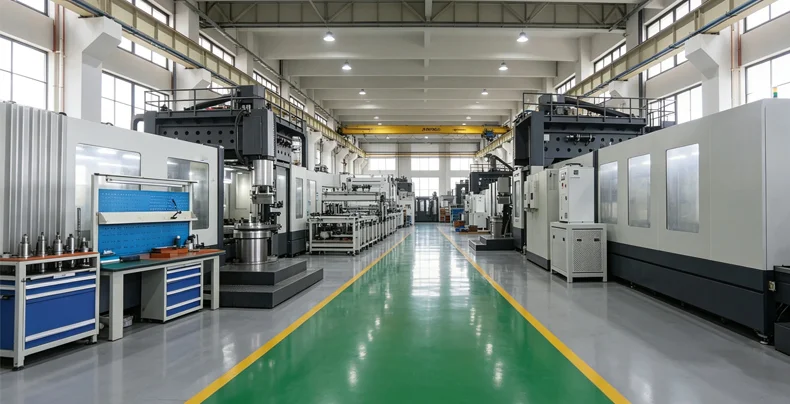
Use these questions to guide your decision:
1. What is your target market?
Industrial bulk packaging (cement, chemicals, fertilizers) → Valve bag line
Consumer retail (shopping bags, food packaging, gift bags) → Square bottom line
2. What is your typical bag load?
25–50 kg → Valve bag — multi‑ply construction required
2–5 kg → Square bottom bag — standard retail load
3. What is your monthly production volume?
Over 2 million bags → Valve bag line (2,000 bags/min combined speed)
Under 1 million bags → Square bottom line (80–260 bags/min, sufficient for most retail volumes)
4. What is your bag closure requirement?
Both ends sealed, valve only → Valve bag
Open top (handles optional) → Square bottom bag
5. What is your dust control requirement?
High (powdered materials) → Valve bag line with clean room production
Low to moderate → Square bottom line — general production environment
6. Do you need inline printing or handle attachment?
Yes → Square bottom line with multi‑function or handle‑capable configurations
No → Valve bag line (printing typically done on pre‑printed paper)
The paper bag market continues to expand across both industrial and retail segments.
Valve bag demand is driven by the industrial and construction sectors. The pasted valve segment is the fastest‑growing in the paper bags market because valve bags are highly efficient and reliable packaging solutions designed for the secure handling of bulk materials. Cement, chemicals, building materials, fertilizers, and feed all require the dust‑free, high‑speed filling that valve bags deliver.
Square bottom bag demand is driven by retail and e‑commerce growth, where packaging serves as brand communication. The ability to stand upright on shelves, carry moderate loads, and present a premium appearance makes square bottom bags the standard for shopping bags, gift bags, and branded retail packaging. Fangbang machines support the production of packaging for internationally recognized brands such as KFC, McDonald‘s, Starbucks, Luckin Coffee, Anta, and Uniqlo.
Many packaging manufacturers eventually operate both production line types — valve bag lines for industrial bulk orders and square bottom lines for retail and consumer packaging. The choice is not about which is “better,” but about which production line fits your specific customer order profile.
For a broader perspective on paper bag machine applications across food, retail, and industrial segments, explore Fangbang‘s complete paper bag machine production solutions.
Once you have determined which production line aligns with your target market — valve bag for industrial bulk packaging, or square bottom paper bag for consumer retail — the next logical step is comparing specific machine specifications. Understanding how actual parameters (speed, paper thickness range, bag size capacity, and special features) align with your production requirements will determine which specific configuration delivers the best return for your operation.
For a practical comparison of roll‑fed and sheet‑fed paper bag machine configurations — and how each serves different retail applications — review the detailed product documentation available in Fangbang‘s paper bag machine lineup.
The following guides explore specific aspects of valve bag and square bottom paper bag production in greater depth:
Valve Bag Making Machine: Understanding Tuber and Bottomer Operations
Square Bottom Paper Bag Machine Configurations for Retail and Food Packaging
Industrial vs Consumer Packaging: Choosing Between Valve Bags and Square Bottom Bags
Paper Sack Production Line Speed: How Valve Bag Lines Achieve 2,000 Bags/Min
Multi‑Ply Construction for Valve Sacks: Why Industrial Packaging Requires Strength
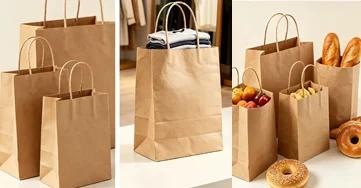
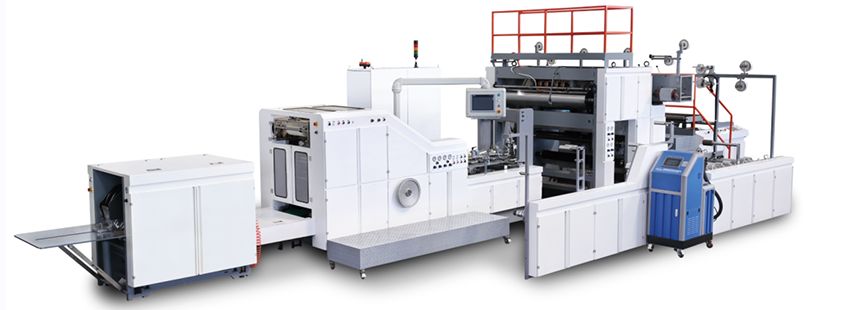
Full-Servo Automatic Square Bottom Paper Bag Making Machine for high-efficiency production of eco-friendly paper bags wi...
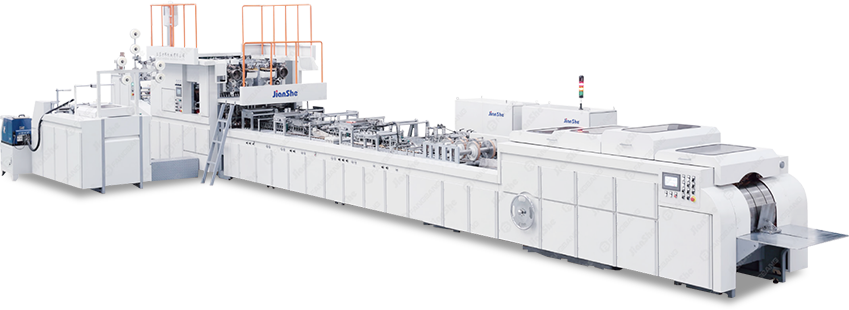
Fully Automatic Sheet-Fed Square Bottom Paper Bag Machine produces paper bags with handles at high speed. Uses sheet pap...
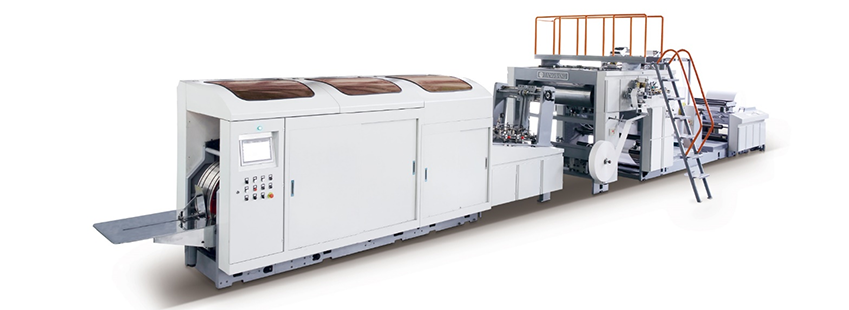
This machine is designed to manufacture square bottom paper bags with flat-rope handles from paper roll,paper patch roll...
GET A QUOTE




 中文
中文 English
 Español
 Français
 Pусский