
You have just purchased a sheet-fed square bottom paper bag machine for your packaging business. The machine sits on your production floor, ready to transform stacks of high-quality paper into premium shopping bags. But where do you start? What are the actual steps to set up, run, and maintain this equipment?
Unlike roll-fed machines that process continuous paper webs, sheet-fed machines work with individual pre-cut sheets — each sheet becoming one bag. This gives you greater flexibility in paper selection and bag design, but also requires a different approach to operation.
This guide provides a practical, step-by-step walkthrough of operating a sheet-fed square bottom paper bag machine, specifically referencing Fangbang's ZD-FP series. You will learn the complete production workflow — from preparing raw materials to adjusting for different bag sizes and performing routine maintenance — helping you get the most from your equipment.
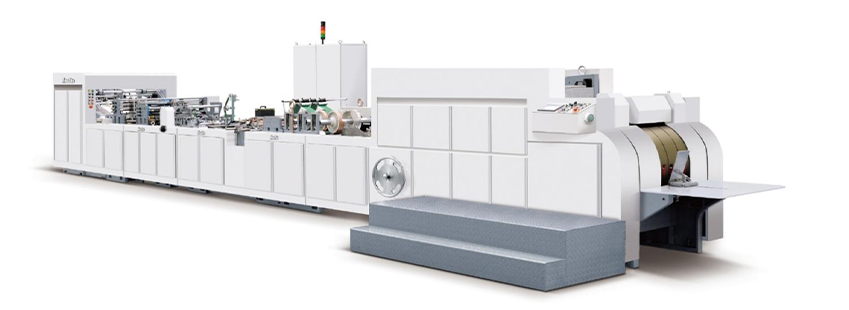
Before diving into the operating steps, it is helpful to understand what this machine does and why it might be the right choice for your production needs.
The ZD-FP series sheet-fed square bottom paper bag machine is an industrial-grade solution for manufacturing medium and high-end luxury paper bags, premium shopping bags, and eco-friendly paper handbags. Using a single sheet of high-quality kraft paper, art paper, or coated paper as raw material, the machine produces durable, flat-bottomed square paper bags without handles in a single pass.
Key machine features that affect operation:
Advanced Pre-Stacking Flyer System – Enables continuous, non-stop paper feeding for uninterrupted high-speed production
Dual Glue Application Technology – Equipped with precision water-based glue and hot melt adhesive systems, ensuring strong, wrinkle-free bonding for various paper weights
User-friendly PLC control panel for easy operation
Symmetrical adjustable double template structure – for different sizes of paper bags, the user does not need to change the template; it can be quickly adjusted
Technical parameters of the ZD-FP series:
| Model | Paper Width | Paper Length | Paper Thickness | Max. Speed |
|---|---|---|---|---|
| ZD-FP08 | 400–780mm | 310–530mm | 100–160 g/m² | 80 bags/min |
| ZD-FP14 | 550–1050mm | 340–630mm | 100–250 g/m² | 80 bags/min |
| ZD-FP18 | 630–1250mm | 340–630mm | 100–250 g/m² | 80 bags/min |
| ZD-FP20 | 710–1320mm | 360–630mm | 100–250 g/m² | 80 bags/min |
The machine integrates automated paper feeding, precision tube forming, edge gluing, side pressing, and reinforced square bottom folding into one high-performance system. For a detailed overview of available sheet-fed configurations, explore the sheet-fed square bottom paper bag machine product lineup.
Proper preparation before starting production is essential for consistent bag quality and smooth machine operation.
Before loading paper into the machine, inspect the raw materials. This includes checking the paper's strength, tensile strength, toughness, and moisture content to ensure the raw material quality meets production requirements.
For the ZD-FP series, confirm that your paper falls within the machine’s specifications:
Paper thickness: 100–250 g/m² (depending on model)
Paper length and width: within the ranges listed in the technical parameters above
Paper type: kraft paper, art paper, coated paper, or other compatible materials
Why this matters: Paper that is too moist, too brittle, or outside the machine's specification range can cause jams, poor folding, or inconsistent bag quality. Taking a few minutes to inspect your paper stock can prevent hours of production problems.
With the paper ready, configure the machine for your specific bag size and design.
Setting bag dimensions:
Set the paper feeding width according to your bag size requirements
Adjust the bag former (or change the fixed bag former if your machine uses one) to match the desired bag width and height
Set the height of the chain brush and end sealing height according to the product's size
Adjusting the forming template:
The ZD-FP series uses a symmetrical adjustable double template structure. For different sizes of paper bags, you do not need to change the template — it can be quickly adjusted, effectively reducing the time required for size adjustments. This is particularly valuable for businesses that produce multiple bag sizes in a single production run.
Setting glue parameters:
The machine's dual glue application system uses both water-based glue and hot melt adhesive. Configure the glue application settings based on your paper type and bag design. Thicker papers may require more adhesive; thinner papers may need less to avoid bleed-through.
Once the machine is set up and materials are ready, the production process runs automatically through a series of integrated steps.
The production cycle begins with sheet feeding. Pre-cut paper sheets are stacked in the feeder and fed into the machine one by one, typically through a vacuum-assisted or friction-driven feed system.
The advanced pre-stacking flyer system enables continuous, non-stop paper feeding for uninterrupted high-speed production. This means you can add new stacks of paper to the feeder while the machine continues running — maximizing output and minimizing downtime.
Operator actions during feeding:
Monitor the paper stack level in the feeder
Add new sheets before the stack runs low
Ensure sheets are properly aligned and free from wrinkles or damage
Once inside the machine, each sheet is precisely aligned. Advanced sheet-fed machines have automatic sheet-alignment mechanisms that use optical sensors or mechanical registration devices to accurately position each sheet before further processing.
Why this matters: Precise alignment is crucial because it sets the foundation for the entire bag-making process. A misaligned sheet will result in a misaligned bag — with uneven folds, crooked seams, or an improperly formed bottom.
After alignment, the machine forms the paper into a tube shape. This involves:
Creasing – The paper is creased along fold lines to create sharp, well-defined folds
Side gluing – Glue is applied to the side seam
Tube formation – The paper is folded and pressed into a tube shape
The ZD-FP series completes paper conveying, tube creasing, edge gluing, and tube forming on a single machine. The photoelectric eye automatically corrects the cutting length, monitoring the position and length of the paper in real time and ensuring the length accuracy of the paper bag square bottom within ±1mm.
The bottom forming stage is where the square bottom takes shape. The machine:
Opens the tube at the bottom
Folds the paper into a square bottom pattern
Applies glue to the bottom folds
Presses and seals the bottom
The square bottom forming process requires precise creasing and folding to achieve a flat, stable base. The creasing station uses rollers that compress the paper along the fold lines, ensuring consistent, sharp folds every time.
For models like the ZD-BFP that produce bags with upper folding mouths and bottom cards, additional steps are included: the machine completes the square bottom paper bag with upper folding mouth and bottom card at one time.
After the bottom is formed and sealed, the finished bags are output from the machine. They are typically delivered onto a collection workbench, where they can be stacked and counted.
Operator actions during output:
Monitor bag quality — check for proper folding, gluing, and sealing
Remove and stack finished bags
Adjust machine settings if quality issues are detected
Maintaining consistent quality at 80 bags per minute requires vigilance. Here are key quality checkpoints:
Visual inspection:
Check that the square bottom is properly formed and flat
Verify that glue is applied evenly and not bleeding through
Ensure folds are sharp and consistent
Dimensional accuracy:
The photoelectric eye system automatically monitors and corrects cutting length
Periodically measure finished bags to confirm they meet specifications
Seal integrity:
Check that bottom seals are strong and secure
For food-grade applications, verify that seals meet hygiene and safety standards
The ZD-FP series includes several models, each suited to different production requirements:
| Model | Best Suited For | Key Specification |
|---|---|---|
| ZD-FP08 | Small to medium luxury bags | Paper width 400–780mm; bag body width 120–250mm |
| ZD-FP14 | Medium premium shopping bags | Paper width 550–1050mm; bag body width 180–350mm |
| ZD-FP18 | Large boutique and gift bags | Paper width 630–1250mm; bag body width 220–450mm |
| ZD-FP20 | Extra-large luxury handbags | Paper width 710–1320mm; bag body width 240–500mm |
All models run at a consistent maximum speed of 80 bags/min. The choice between models depends primarily on the bag sizes you plan to produce and the paper widths you will use.
For applications requiring handles or upper folding mouths, Fangbang also offers:
The ZD-QFB – an automatic square bottom machine designed to manufacture square bottom paper bags with flat-rope handles from paper roll, paper patch roll, and flat handle paper roll
The ZD-BFP – an auto sheet-fed machine that takes single sheets of paper as raw material and completes square bottom paper bags with upper folding mouth and bottom card at one time
Regular maintenance keeps your sheet-fed machine running smoothly and extends its service life.
Daily maintenance:
Clean glue application systems to prevent buildup
Inspect feeding mechanisms for paper dust accumulation
Check that sensors and photocells are clean and properly aligned
Periodic maintenance:
Lubricate moving parts according to the manufacturer's schedule
Inspect and replace worn blades, belts, and rollers
Calibrate sensors and alignment systems
The ZD-FP series is designed with maintenance convenience in mind. The machine's structure is compact, and the layout of components is reasonable, making it easy for operators to carry out daily inspection and maintenance. The machine uses high-quality parts and materials with good abrasion and corrosion resistance, which reduces failure frequency and maintenance costs.
Common issues and solutions:
| Issue | Possible Cause | Solution |
|---|---|---|
| Paper jams | Misaligned sheets or incorrect settings | Check sheet alignment and feed settings |
| Poor folding quality | Worn creasing rollers or incorrect pressure | Inspect and adjust creasing station |
| Weak bottom seals | Insufficient glue or incorrect temperature | Check glue application and adhesive settings |
| Inconsistent bag size | Sensor misalignment or drift | Recalibrate photoelectric sensors |
Understanding the step-by-step operation of a sheet-fed square bottom paper bag machine is the foundation for efficient production. Whether you are producing luxury retail bags, food packaging, or boutique shopping bags, the ZD-FP series offers the precision and flexibility required for premium applications. The machine's ability to handle a wide range of paper types — from standard kraft to coated art paper and laminated materials — makes it a versatile solution for converters serving diverse markets.
Once you have mastered the operating procedures — from paper preparation and machine setup through production monitoring and quality control — the next logical step is optimizing your production planning. Understanding how paper thickness, bag size, and changeover frequency affect your throughput will help you schedule runs efficiently and maximize your machine's output.
For a detailed practical comparison between sheet-fed paper bag machines and roll-fed paper bag machines, as well as their respective advantages for different batch sizes and production demands, explore the complete machine specifications within Fangbang’s full paper bag making machine product line.
The following guides explore specific aspects of sheet-fed square bottom paper bag machine operation and applications in greater depth:
ZD-FP Series Technical Parameters: How to Choose the Right Model for Your Bag Size
Dual Glue Application Technology for Sheet-Fed Paper Bag Machines
Pre-Stacking Flyer System: Achieving Continuous Sheet Feeding at 80 Bags/Min
Square Bottom Forming on Sheet-Fed Machines: Achieving ±1mm Dimensional Accuracy
Preventive Maintenance for Sheet-Fed Paper Bag Machines: Daily, Weekly, and Monthly Checklists
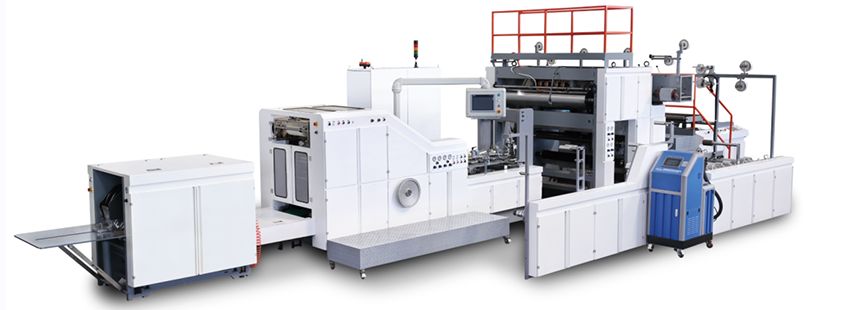
Full-Servo Automatic Square Bottom Paper Bag Making Machine for high-efficiency production of eco-friendly paper bags wi...
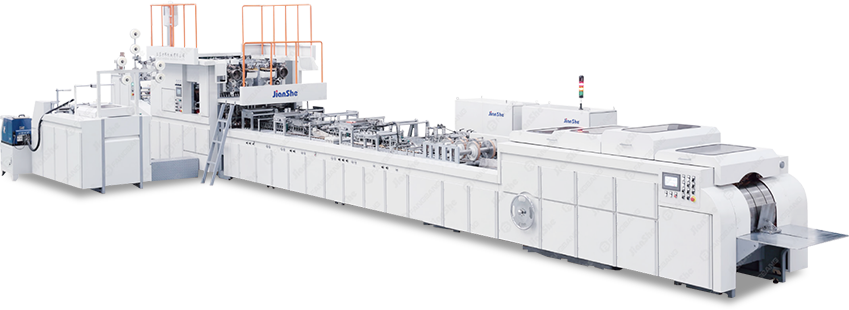
Fully Automatic Sheet-Fed Square Bottom Paper Bag Machine produces paper bags with handles at high speed. Uses sheet pap...
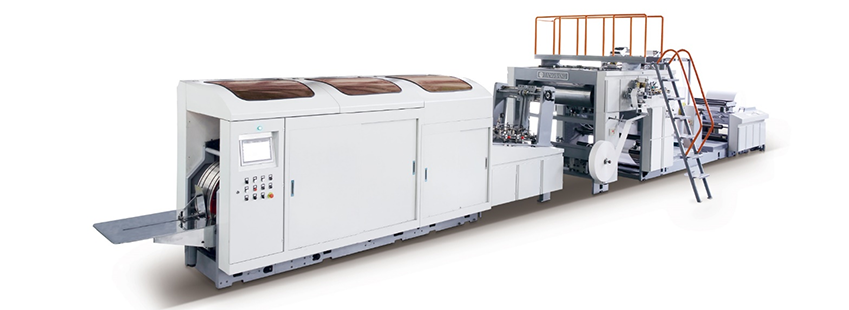
This machine is designed to manufacture square bottom paper bags with flat-rope handles from paper roll,paper patch roll...
GET A QUOTE




 中文
中文 English
 Español
 Français
 Pусский