
A packaging manufacturer recently faced a choice. One customer ordered 200,000 square-bottom shopping bags for a supermarket chain. Another requested 50,000 V-bottom bags for a wine retailer. The machine that excels at one will struggle with the other. The wrong choice means either overpaying for capabilities you do not need or turning down profitable orders because your machine cannot produce the required bottom shape.
This is not a question of which machine is “better.” Square-bottom and V-bottom paper bag machines are tools for different markets. Understanding what makes them different — from forming mechanisms and speed profiles to material consumption and end‑use applications — is the first step toward a production line that actually fits your customer base.
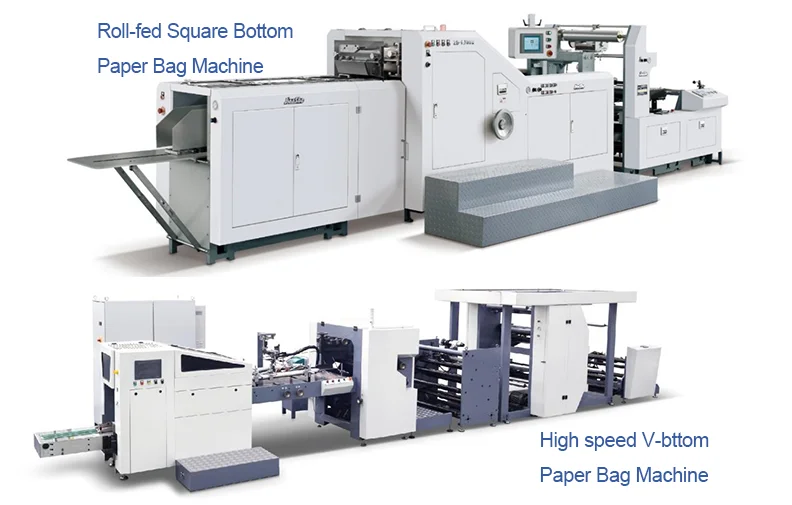
This guide compares the two machine types side by side. You will learn how each bottom shape is formed, what production volumes they support, and which industries they serve. By the end, you will have a practical decision framework to match machine configuration to your order pipeline — not the other way around.
A square‑bottom paper bag — also known as a block bottom, flat bottom, or SOS (self‑opening square) bag — has a rectangular base that allows the bag to stand upright on its own. This shape delivers stability, a professional presentation, and the ability to hold heavier loads without collapsing.
Square‑bottom paper bag machines use a multi‑step forming process. The machine first creates a paper tube from a roll or sheet. A drum and clamp system then opens the tube, folds the bottom into a rectangular shape, applies glue, and presses it shut. The result is a reinforced flat base.
Fangbang‘s ZD-FJ series roll‑fed square‑bottom paper bag machines, for example, implement steps including paper feeding, tube forming, tube cutting, and bottom forming in a single inline process, with an equipped photoelectric detector that corrects the cutting length to ensure precision and a Siemens PLC system for stable operation.
Fangbang’s square‑bottom paper bag machine portfolio covers multiple configurations:
| Model Series | Feeding Type | Handle | Speed Range | Paper Thickness | Key Application |
|---|---|---|---|---|---|
| ZD-FJ series (e.g., ZD-FJ08) | Roll-fed | No handle | Up to 260 bags/min | 45–130 g/m² | Food industry, e‑commerce, bulk packaging |
| ZD-FP series (e.g., ZD-FP08/14/18/20) | Sheet-fed | No handle | 80 bags/min | 100–250 g/m² | Luxury paper bags, premium shopping bags |
| ZD-QFJ series | Roll-fed | Round rope (full‑servo) | 110–220 bags/min | 45–150 g/m² | Handled shopping bags, supermarket bags |
| ZD-QFB series | Roll-fed | Flat rope | — | 70–160 g/m² | High‑end retail, branded packaging |
| ZD-FJ+T+D+W+P | Roll-fed | Optional add‑ons | — | — | Flexo printing, dual‑layer pasting, window making |
The ZD-FJ08 model within the ZD-FJ series achieves a maximum speed of 260 bags per minute, with paper roll width up to 630mm and tube length from 190mm to 370mm. The ZD-FP14 sheet-fed model handles paper thickness from 100 to 250 g/m² — capable of processing coated art paper, laminated board, and heavier specialty stocks that roll‑fed machines cannot accommodate.
For manufacturers producing handled bags, the ZD-QFJ series uses a full‑servo system with independent servo motors controlling each axis — paper feeding, cutting, and bottom forming. Full‑servo systems generally provide greater precision and faster changeover times between production runs. In the broader industry, full‑servo handle cutting can save 6–8 kilograms of handle raw material per day compared to traditional mechanical transmission machines.
Square‑bottom bags use more material to reinforce the flat base, which increases material cost per bag. However, the durability of square‑bottom bags allows multiple reuses — meaning moderate long‑term environmental impact per use cycle. The extra material translates directly to load‑bearing capacity: square‑bottom bags typically handle heavier loads better — 4–6 kg comfortably, depending on paper quality.
If your customers prioritize bag strength, stability, and presentation — especially for heavy or high‑end retail products — square‑bottom is the appropriate configuration.
For a detailed look at how different feeding methods and automation levels affect square‑bottom production, see this comprehensive guide to paper bag machine configurations covering the full product range.
A V‑bottom paper bag — sometimes called a pointed bottom or pinch‑bottom bag — has a folded base that forms a “V” shape when viewed from the side. This design is less structured than a square bottom, uses less material, and conforms closely to the shape of the contents.
V‑bottom paper bag machines are specially designed to make paper bags with pointed bottoms. The forming process is less complex than square‑bottom production but requires precise control of the folding angle and shape of the paper to ensure the pointed bottom is aesthetically consistent and structurally sound.
Pointed-bottom paper bags have a unique appearance and are often used to package items of special shapes — wine bottles, bouquets, and other products where the bag needs to accommodate non‑rectangular contents.
Fangbang offers the ZD-J series (including sub-models such as ZD-J13), a high-speed V-bottom paper bag machine. The ZD-J13 is a roll-fed, V-bottom paper bag machine designed for producing mid-size and large-size paper bags. It handles paper thickness ranging from 35 to 80 g/m² and can produce bags with widths between 80 and 320 mm and lengths from 160 to 700 mm.
| Specification | ZD-J Series (ZD-J13) |
|---|---|
| Paper roll width | 80–320 mm (bag width) |
| Bag length | 160–700 mm |
| Paper thickness | 35–80 g/m² |
| Material compatibility | Kraft paper, ribbed kraft, grease‑proof, coated, medico paper |
V‑bottom machines use less material than square‑bottom machines, offering a lower cost per unit for lightweight bulk production. However, the trade‑off is structural integrity: V‑bottom bags are thinner and less structured than square‑bottom bags, making them ideal for quick‑service scenarios rather than heavy‑duty retail use.
If your customers require lightweight packaging for bulk items where presentation is secondary to cost efficiency — or need bags that conform to irregularly shaped products — V‑bottom is the appropriate configuration.
Understanding the differences helps you match machine type to actual production requirements. The table below summarizes the key distinctions:
| Comparison Factor | Square Bottom Machine | V-Bottom Machine |
|---|---|---|
| Bottom shape | Rectangular/flat base — stands upright | Pointed / “V” shape — conforms to contents |
| Mechanical complexity | More complex forming process; requires precise control | Simpler; lower maintenance requirements |
| Speed range | Up to 260 bags/min (ZD-FJ08) | Varies by model |
| Material usage | Higher — more paper to reinforce flat base | Lower — minimal material for pointed fold |
| Typical paper thickness | 45–130 g/m² (ZD-FJ08); 100–250 g/m² (ZD-FP) | 35–80 g/m² |
| Load capacity | 4–6 kg comfortably; reusable | Lighter loads; typically single‑use |
| Primary applications | Supermarket bags, retail shopping bags, food packaging, gift bags, e‑commerce | Wine bags, bouquet wraps, bakery bags, fast‑food takeaways, lightweight bulk packaging |
| Bag presentation | Professional, stands on shelf | Compact, follows product shape |
| Cost structure | Higher material cost per bag; lower per‑bag labor (automated) | Lower material cost per bag; faster cycle time |
Square‑bottom machines are ideal for heavy or high‑end retail products, where bag strength and stability are essential. V‑bottom machines are better suited for lightweight or specialty applications, where material efficiency and speed matter more.
Choosing between square‑bottom and V‑bottom machines comes down to three questions about your target customers and order pipeline.
If your customers sell heavy or bulky products — groceries, hardware, books, clothing, gifts — a square‑bottom bag is the appropriate choice. The flat base distributes weight evenly, and the reinforced bottom prevents tearing at the point of highest stress. Square‑bottom bags can also be reused multiple times, which resonates with environmentally conscious retailers.
If your customers sell lightweight or oddly shaped products — wine bottles, flower bouquets, pastries, small electronics — a V‑bottom bag may better suit the requirement. The pointed shape conforms to the product rather than forcing the product to conform to a flat base. V‑bottom bags use less material, which lowers cost per bag for high‑volume, low‑margin orders.
Square‑bottom machines generally produce fewer bags per minute than V‑bottom machines of comparable price points because the square bottom forming process is more complex. However, for many small and medium operations, square‑bottom speeds of up to 260 bags/min (ZD-FJ08) are sufficient to meet demand.
High‑volume, lightweight orders (500,000+ bags/month for standard takeaway bags) → V‑bottom machines deliver the fastest cycle time and lowest material cost per bag, making them suitable for bulk production with tight margins.
Mixed‑volume, variable orders (retail bags across 5–15 SKU sizes per week) → Square‑bottom machines with servo‑controlled adjustable forming templates and preset memory reduce changeover time and allow a single machine to handle diverse order types without excessive downtime.
Square‑bottom bags project a premium image. They stand upright on store shelves, display logos clearly, and signal quality to end customers. Many boutique shops, department stores, and high‑end food brands specify square‑bottom bags as part of their packaging identity.
V‑bottom bags project efficiency and practicality. They are not designed for shelf display — they are designed to get products from the counter to the customer‘s hand with minimal material waste. For fast‑food chains, bakeries, and bulk commodity sellers, V‑bottom bags are often the standard.
The choice reflects your customer’s brand more than your production capability. If your target market is premium retail, square‑bottom is the expected format. If your target market is high‑volume food service or specialty shapes, V‑bottom may be the more practical choice.
For a deeper understanding of how machine selection aligns with different packaging applications — from premium retail to industrial packaging — explore complete production solutions for diverse paper packaging applications.
A packaging converter serves 30 supermarket and grocery store chains in Southeast Asia. Monthly orders: 800,000 square‑bottom shopping bags without handles, across 4 standard sizes. No printing — stores apply barcode labels after filling. Handles not required.
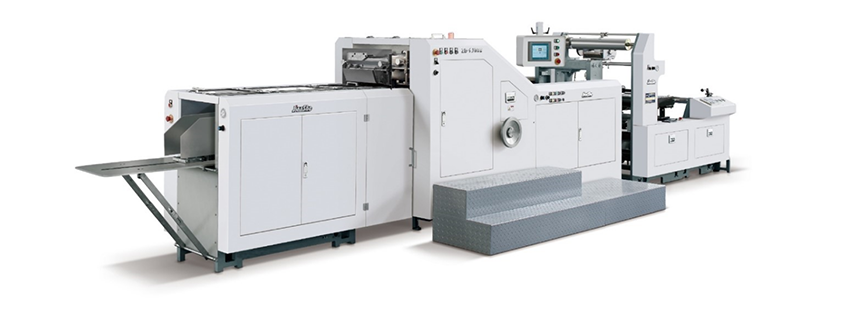
Recommended configuration: ZD-FJ08 roll‑fed square‑bottom paper bag machine.
Speed: 260 bags/min — 800,000 bags completed in approximately 51 hours of runtime
Paper roll width: 290–630mm
Paper thickness: 45–130 g/m² — covers standard kraft grocery bag stock
Tube length: 190–370mm
Bag body width: 80–200mm
Bag bottom size: 50–100mm
No handle modules — lower initial investment and simpler maintenance
Quick size change with adjustable double template structure — four sizes dialed in from control panel without changing physical formers
Why this works: Supermarket bags require the durability and stability of square‑bottom construction. The consistent order volume and limited size variety make roll‑fed the material‑ and labor‑efficient choice.
A small packaging business produces 200,000 bags annually for 15 boutique wineries. Each order is for 5,000–15,000 bags. Bags must accommodate wine bottle shapes, include decorative handles, and carry the winery’s logo in high‑quality printing. Most bags are V‑bottom — conforming to the bottle profile — but the business also receives occasional square‑bottom gift bag orders.
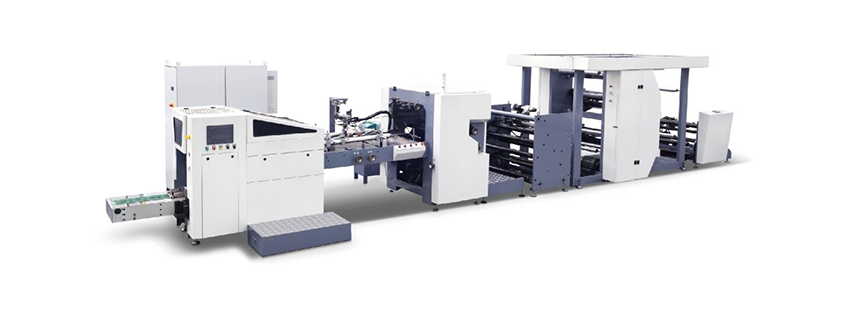
Recommended configuration: ZD-J series (e.g., ZD-J13) V‑bottom paper bag machine for the core wine bag production.
Paper thickness: 35–80 g/m²
Bag width: 80–320mm
Bag length: 160–700mm
V‑bottom profile matches wine bottle shape
Why this works: Wine bottles do not need a flat square base — they will not stand upright on their own regardless of bag bottom shape. The V‑bottom uses less material, conforms to the product, and costs less per bag. The premium presentation comes from the handle and printing, not the bag bottom.
For small businesses producing gift packaging across multiple bottom styles and paper types, exploring sheet‑fed paper bag machine configurations can provide the flexibility required for short‑run, high‑mix orders.
Paper packaging continues to expand globally. Within this growth, both square‑bottom and V‑bottom segments are expanding — but driven by different demand factors.
Square‑bottom demand is fueled by retail and e‑commerce growth, where packaging doubles as brand communication. V‑bottom demand is driven by food service, specialty retail (wine, flowers, gifts), and any application where product shape dictates bag geometry.
For a converter serving multiple industries, owning both machine types is not uncommon. Many packaging manufacturers use square‑bottom machines for their main retail line and V‑bottom machines for smaller purchases, takeaways, or specialty orders. The choice is not binary — it is about matching machine capabilities to your specific customer order profile.
Once you have determined which bottom shape your target market requires — a square bottom for stability and premium presentation, or a V‑bottom for material efficiency and speed — the next logical step is comparing specific machine specifications. Understanding how actual parameters (paper thickness compatibility, speed, handle integration, changeover time) align with your order history will determine which specific model delivers the best return for your operation.
Roll‑Fed vs Sheet‑Fed Paper Bag Making Solution
Types and Selection Guide of Paper Bag Machines
5 Common Pain Points in Paper Bag Making Solution
Reduce Downtime with Smart Paper Bag Making Solution
From Roll to Bag: Understanding the Complete Paper Bag Making Process
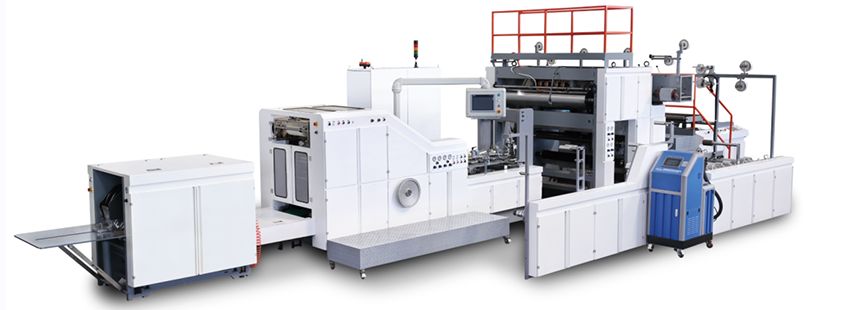
Full-Servo Automatic Square Bottom Paper Bag Making Machine for high-efficiency production of eco-friendly paper bags wi...
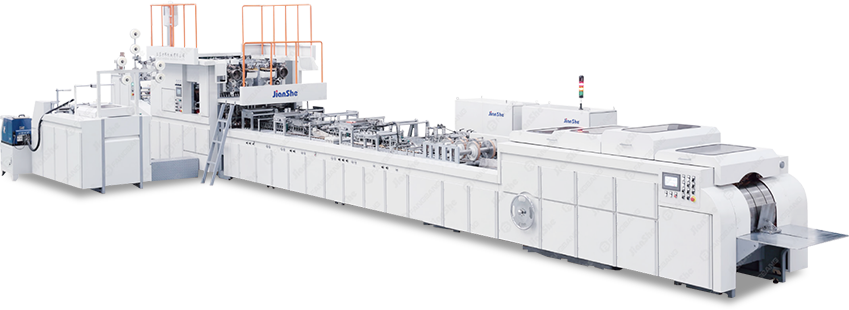
Fully Automatic Sheet-Fed Square Bottom Paper Bag Machine produces paper bags with handles at high speed. Uses sheet pap...
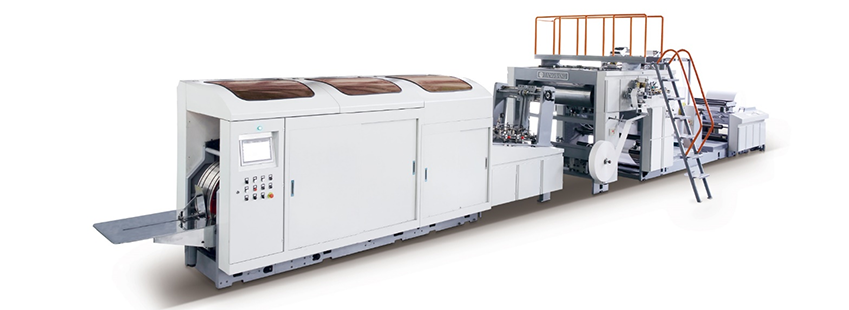
This machine is designed to manufacture square bottom paper bags with flat-rope handles from paper roll,paper patch roll...
GET A QUOTE




 中文
中文 English
 Español
 Français
 Pусский